
Views: 0 Author: Site Editor Publish Time: 2026-04-12 Origin: Site
Upgrading your vacuum coating infrastructure demands absolute precision. Processing ultra-thin films down to 2-3 microns requires specialized equipment capabilities. You must abandon traditional drum-based resistance heating methods for these delicate tasks. Heat-sensitive materials simply cannot survive outdated thermal processes.
Contact-based cooling drums introduce massive operational challenges. They often trigger thermal distortion across the film web. They cause severe wrinkling and surface scratching on sensitive substrates. This damage inevitably leads to unacceptable scrap rates and lost revenue.
You can overcome these hurdles by transitioning to a Free Span Induction Heating Metallizer machine. This technology completely removes physical drum contact during the critical coating zone. It also utilizes highly stable induction evaporation for unmatched consistency. This guide provides plant managers, process engineers, and procurement teams a robust evaluation framework. You will learn to assess technical capabilities and calculate Total Cost of Ownership (TCO). You will easily shortlist the ideal equipment vendor.
A true free span architecture eliminates cooling drum contact, preventing thermal distortion on heat-sensitive and ultra-thin substrates.
Induction heating provides superior temperature uniformity compared to resistance boats, directly enabling pinhole-free barrier coatings.
Versatility is a primary ROI driver; top-tier machines must demonstrate multi-substrate compatibility and handle various deposition materials.
Vendor shortlisting should prioritize advanced web tension control systems and verifiable Factory Acceptance Testing (FAT) for defect-free roll profiles.
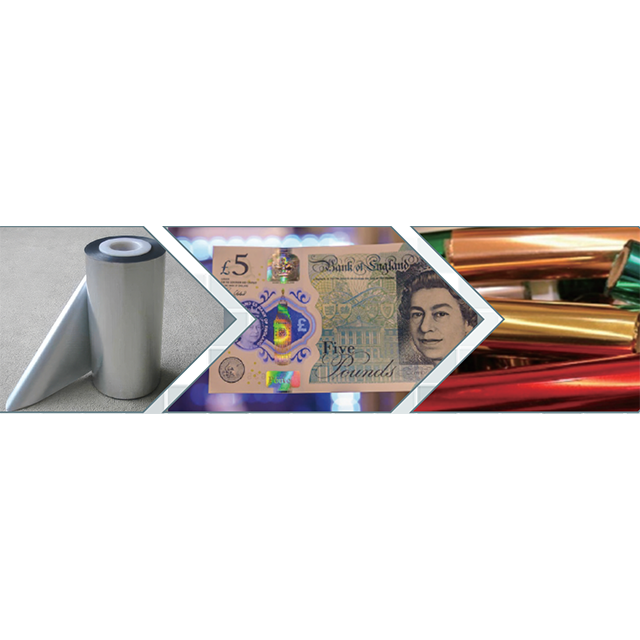
Traditional drum-based metallizers rely on direct physical contact. They use a chilled drum to pull heat away from the substrate. This process often fails when handling films under 10 microns. The direct surface contact introduces high mechanical stress. It creates severe static electricity buildup. You also face constant thermal transfer bottlenecks. Thin films trap air between the substrate and the cooling drum. This trapped air prevents efficient heat transfer. Consequently, the film overheats and melts during the deposition phase.
Free span technology entirely reimagines the coating zone. It removes the substrate from the cooling drum surface. The film runs freely above the evaporation source. This separation prevents immediate heat shock. It completely eliminates mechanical scratching from drum debris. The web receives the metal vapor without fighting drum friction. You achieve much better thermal isolation. The film cools naturally and evenly after passing the vapor plume.
You must clearly define your production thresholds. Investing in free span architecture becomes necessary for specific applications. High-barrier food packaging requires pristine metal layers. High-value optical films cannot tolerate any surface scratches. Electric vehicle (EV) battery substrates demand ultra-thin, flawless profiles. You should upgrade when your current scrap rate exceeds acceptable margins on high-margin products.
Metric | Drum-Based Resistance | Free Span Induction |
|---|---|---|
Minimum Thickness | Typically 12-15 microns | Down to 2-3 microns |
Thermal Distortion Risk | High (trapped air issues) | Very Low (no contact during coating) |
Scratch Defect Rate | Moderate to High | Near Zero |
Ideal Applications | Standard packaging, thick films | EV battery, optical, ultra-thin barrier |
Running a web without drum support requires extreme precision. You must evaluate multi-zone, closed-loop tension control systems. These systems utilize load cells and digital drives. They monitor and adjust web tension in real-time. They keep the film perfectly flat across the free span zone.
Assess the specific edge-guiding configurations. These guides prevent the web from wandering laterally. You must also inspect the flattening roller designs. Flattening rollers spread the web outward. They eliminate longitudinal wrinkles before the film enters the vapor plume. Best practice dictates using bowed or spreader rollers directly before the coating zone.
Induction heating transforms the evaporation process. You must analyze the induction heating frequency. High-frequency generators create aggressive, stable magnetic fields. These fields melt the deposition material uniformly. The crucible design also plays a major role. Specialized crucibles focus the heat strictly on the evaporant. This prevents stray radiant heat from warping the web.
Hardware precision directly impacts barrier quality. You require highly stable vapor plumes to achieve a strictly Pinhole-free metallized layer. Fluctuating temperatures cause metal spitting. Spitting creates pinholes and compromises the barrier.
Masking mechanisms are equally critical. Evaluate the vapor direction shields. They must adjust precisely to the web width. Proper shielding ensures edge-to-edge uniformity. Modern systems guarantee you have No uncoated lines along the roll edges.
Hardware Checklist for Defect Reduction:
High-frequency solid-state induction power supplies.
Graphite or composite crucibles with optimized thermal mass.
Closed-loop optical density (OD) monitoring systems.
Adjustable edge masks with automated positioning.
Market demands change rapidly. You must frame Multi-substrate compatibility as a core risk-mitigation factor. Buying a machine restricted to one film type severely limits your ROI. You need equipment capable of pivoting when client contracts shift.
During the vendor evaluation, demand proof of adaptability. Verify the proposed system is strictly Compatible with various flexible coating substrates. It should process PET, BOPP, and CPP without major mechanical changes. It must also handle demanding high-temperature films like Polyimide. Furthermore, it should seamlessly manage stretch-prone materials like PE and ultra-thin capacitor films. What to watch out for: poorly calibrated tension zones will snap thin capacitor films instantly.
Your deposition source defines your product catalog. Assess the induction crucible's maximum temperature limits. Standard aluminum requires lower temperatures than copper or silver. The crucible material must endure these thermal cycles without cracking.
Ensure the purchased machine is Capable of depositing a wide range of coating materials. You might run Aluminum today. You might need Copper, Silver, Zinc, or specialty alloys tomorrow. A flexible induction system accommodates these metals easily. You should never require complete internal retrofits just to change the evaporant material.
Verify Temperature Ranges: Ensure the power supply can reach the melting point of high-density metals.
Check Crucible Compatibility: Confirm the crucible liner does not chemically react with your chosen metal alloy.
Assess Wire Feed Mechanisms: The wire feeder must handle different wire diameters for various metals.
Calculating TCO requires looking beyond the initial purchase price. Energy consumption heavily dictates long-term profitability. Compare the power draw of high-frequency induction supplies against traditional resistive heating banks. Resistance boats waste massive amounts of energy through radiant heat loss. Induction heating focuses energy directly into the metal evaporant. Over a standard 5-year operating cycle, induction systems routinely reduce power costs by significant margins.
Consumable budgets often surprise new operators. Evaluate the actual lifespan of induction crucibles versus standard resistance boats. Resistance boats degrade quickly. They often require replacement after a single long run. Induction crucibles offer remarkable longevity. They survive dozens of production cycles. You must factor in these reduced replacement costs. You also save substantially on the maintenance labor required to swap out components.
Higher yields represent the fastest path to ROI. Calculate your returns based on dramatically reduced scrap rates. The free span design eliminates web breaks caused by drum adhesion. You entirely eliminate thermal-degradation defects on heat-sensitive films. Saving just 3% of your daily material run quickly justifies the capital expenditure.
Machine downtime kills profitability. Assess the vacuum pump-down speeds. High-capacity diffusion pumps and roughing blowers get you into production faster. Evaluate the availability of automated cleaning cycles. They remove metal buildup from shields without manual scraping. Finally, review the roll-changeover efficiencies. Quick-release winding chucks keep the machine running and minimize idle operator time.
Cost Category | Traditional Resistive Drum | Free Span Induction |
|---|---|---|
Energy Consumption | High (radiant heat loss) | Optimized (localized heating) |
Consumable Costs | High (frequent boat replacements) | Low (durable crucibles) |
Scrap / Yield Loss | Moderate to High (thermal damage) | Very Low (contactless cooling) |
Maintenance Labor | Intensive (cleaning, boat swaps) | Streamlined (longer cycles) |
Installing advanced vacuum equipment demands serious facility preparation. Detail the requisite facility upgrades early in the project. These machines require high-capacity chilled water loops. The cooling systems protect the vacuum chamber walls and induction coils. You need dedicated, clean power drops for the induction power supplies. Voltage fluctuations will destabilize the vapor plume. If you process medical or advanced electronic films, you must also ensure strict cleanroom compatibility.
Your team must unlearn old habits. Address the specific training requirements for transitioning staff. Moving from resistance to induction systems requires new operating paradigms. Operators must learn to tune induction frequencies for optimal melting. Crucible packing techniques differ entirely from loading resistance boats. Tension adjustments in a free span zone are highly sensitive. You must schedule comprehensive vendor-led training sessions to bridge this knowledge gap. Common mistake: assuming experienced operators can run a free span machine without formal induction training.
High-power induction systems introduce new safety variables. Evaluate the machine's hardware interlocks. These interlocks must shut down power if the vacuum drops or water flow stops. Inspect the electromagnetic shielding around high-frequency induction zones. Strict compliance with regional electrical and industrial standards is mandatory. Verify the equipment holds valid CE, UL, or ISO certifications before authorizing shipment.
Never act as a vendor's test case. Look for manufacturers with highly verifiable installations. They must prove experience in your specific application field. A vendor excellent at standard packaging might fail at high-tech electronics. Ask for case studies involving EV battery substrates or aerospace laminates. Speak directly to their past clients about machine reliability.
A rigorous FAT protects your investment. You must control the testing parameters completely.
Require sample runs using your actual production films, not the vendor's ideal test stock.
Mandate strict optical density consistency checks across the entire web width.
Require lab-verified adhesion testing to ensure the metal bonds correctly without drum cooling.
Simulate an emergency stop to test the rapid tension recovery system.
Post-installation support determines long-term success. Evaluate the vendor's local spare parts availability. Sourcing proprietary induction components from overseas causes weeks of downtime. Test their remote diagnostic capabilities. Modern machines allow engineers to troubleshoot PLC logic securely over the internet. Demand guaranteed response times for any vacuum-related downtime emergencies.
Selecting the right free span induction metallizer requires a strategic approach. You must balance highly sensitive web handling with ultra-stable evaporation technology. Free span architectures completely resolve the thermal and mechanical limitations of traditional drum-based systems. They allow you to process ultra-thin films safely and profitably.
We advise buyers to strictly prioritize machines offering verifiable defect reduction. Demand proof of completely pinhole-free layers and edge-to-edge uniformity. Broad material flexibility remains crucial to future-proof your CapEx investment. Adaptable machines protect you against unpredictable market shifts.
Take action today by consulting with a specialized vendor's application engineering team. Request a custom ROI analysis based on your specific scrap reduction goals. Arrange a trial coating run using your most difficult heat-sensitive substrate to see the technology perform firsthand.
A: Typically down to 2-3 microns, depending on the sophistication of the closed-loop tension control and substrate material.
A: Induction heating offers highly localized, stable temperature control for the evaporant, reducing stray radiant heat that can warp sensitive substrates.
A: While highly dependent on the deposition material and cycle times, induction crucibles generally offer significantly longer lifespans, reducing machine downtime and consumable costs.
A: Yes, provided the equipment was specified for multi-substrate compatibility and has the requisite tension zones and pump capacities for high-vacuum electronic applications.


