
Views: 0 Author: Site Editor Publish Time: 2026-05-06 Origin: Site
The tobacco industry faces a compound threat draining billions in global revenue every year. Illicit repackaging operations steal massive market share, often harvesting genuine boxes to peddle inferior tobacco. Simultaneously, poor barrier controls ruin product aroma and degrade brand equity before the product even reaches the shelf. You cannot rely on standard printed labels or legacy materials to stop these sophisticated threats. To combat these vulnerabilities, traditional composite aluminum foils are rapidly being replaced by advanced vacuum metallizing technologies.
Implementing a purpose-built Cigarette Packaging Anti-Counterfeiting Metallizer fundamentally resolves both security risks and structural limitations right at the substrate level. This guide gives you a technical and operational framework to evaluate high-end metallized packaging solutions. We will focus on multi-layered authentication mechanisms, core barrier physics, and calculating your total cost of ownership at scale.
Structural Security: Advanced metallizing embeds security directly into the substrate, integrating micro-text, UV elements, and irreversible tamper-evident features that defeat illicit repackaging.
Superior Barrier Metrics: Micron-level aluminum deposition (0.05–0.3μm) drastically lowers OTR (Oxygen Transmission Rate) and WVTR (Water Vapor Transmission Rate), ensuring maximum aroma preservation.
Production Efficiency: Choosing between direct and transfer metallizing impacts line speed and aesthetic output, but modern substrates integrate seamlessly with existing high-speed hot stamping and die-cutting machinery.
Sustainable ROI: Next-generation metallizing reduces aluminum usage by up to 1/500th compared to traditional foil, aligning with stringent zero-VOC and recyclability mandates without sacrificing visual impact.
Tobacco brands fight aggressive counterfeiting daily across global markets. Criminals routinely execute illicit repackaging schemes. They carefully harvest authentic outer packaging and refill it with substandard, unregulated tobacco. This deeply risks consumer health. It rapidly erodes brand equity and creates massive tax revenue losses worldwide. Brand owners simply cannot afford passive packaging solutions.
Simultaneously, you face a stringent technical problem. Packaging must maintain a highly stable microclimate. It must lock in volatile flavor compounds and essential oils. At the exact same time, it must aggressively lock out external moisture. Fluctuating humidity levels destroy tobacco quality. Excessive moisture invites mold, while extreme dryness turns premium blends into harsh, unsalable products.
A high-end Cigarette Packaging Anti-Counterfeiting Metallizer bridges this crucial gap. By utilizing a highly controlled vacuum environment, operating near 1.33×10² Pa and heating aluminum wire to 1400℃, it creates a game-changing material. The process deposits an ultra-thin, incredibly dense protective layer directly onto the paper board. This layer serves a dual purpose. It acts as an impenetrable barrier against oxygen and moisture. Furthermore, it creates a pristine canvas for embedding complex, proprietary optical security features.
Relying solely on external sticker seals, which counterfeiters easily bypass using heat guns.
Ignoring the correlation between barrier failure and counterfeit susceptibility (degraded boxes look fake).
Over-engineering the package weight without improving the actual substrate density.
To defeat sophisticated counterfeiters, you must engineer security across multiple layers. Advanced metallization allows us to build an interlocking defense system directly into the packaging material itself.
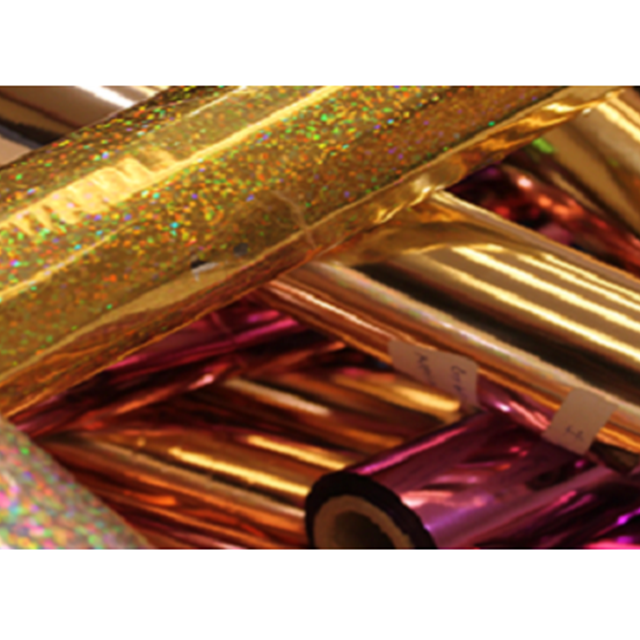
We integrate complex optical variables to provide immediate, naked-eye authentication. Applying Holographic Film during or post-metallization is highly effective. Consumers easily recognize dynamic color shifts, flip-flop animations, and zero-level light diffraction. Standard printing presses simply cannot replicate these microscopic optical effects. This ensures your customers can verify product authenticity instantly without needing special tools.
Visual elements protect the consumer, but covert features protect your supply chain. We embed machine-readable features deeply into the metallized substrate. Inspectors in the field use magnifiers and specialized lighting to verify micro-text and UV-fluorescent patterns. These elements stay entirely hidden from casual observers. However, they provide ironclad proof during audits or legal disputes regarding product origin.
You must prevent the physical harvesting of your boxes. Structural silicone coatings and pre-defined peeling zones achieve this goal flawlessly. When a counterfeiter tries to peel the inner foil or dismantle the outer box, they fail. The substrate suffers irreversible 3D physical damage. Tamper-evident zones tear predictably. They leave behind structural voids or "VOID" text, rendering the box utterly useless for illicit repackaging.
Security means nothing if the tobacco degrades inside the box. You must evaluate the core physics of preservation. The primary metrics we measure are OTR (Oxygen Transmission Rate) and WVTR (Water Vapor Transmission Rate). A dense, uniform metallized layer forcefully blocks the migration of essential oils. It stops moisture dead in its tracks.
Packaging undergoes immense physical stress during converting and transit. Introducing a Suspended Coating Design changes the game completely. This breakthrough methodology isolates the sensitive functional layers from direct mechanical impact. It reinforces the barrier structure to absorb severe shock. Creasing, folding, and high-speed die-cutting no longer cause micro-cracking in the aluminum layer. You maintain absolute barrier integrity throughout the entire global supply chain.
Integrating the metallized layer with specialized Cigarette Packaging Film (like oriented BOPP or PET) yields incredible structural results. This composite easily outperforms thicker, legacy materials. You gain superior tensile strength and an unbeatable aroma lock.
Feature Matrix | Traditional Foil Laminate | Advanced Metallized Paper |
|---|---|---|
Aluminum Thickness | 6.0 - 9.0 μm | 0.05 - 0.3 μm |
Fold Stress Resistance | Prone to micro-cracking | Excellent (Suspended Coating Design) |
Recyclability | Poor (Complex separation required) | High (Easily repulped) |
Embedded Security | Limited to surface printing | High (Integrated optical & physical) |
Adopting new materials often causes anxiety regarding production line speeds. However, modern metallized substrates are specifically engineered for high-speed automated environments. You must evaluate two primary manufacturing approaches.
Direct vacuum metallization deposits vaporized aluminum directly onto the base paper. This method is highly cost-effective and runs perfectly for lighter 40-120g substrates. Conversely, transfer metallization offers superior smoothness and stronger adhesion. The manufacturer deposits aluminum onto a PET carrier film first, then transfers it to the board. This method suits high-fidelity holographic patterns on heavier boards typically used for premium outer cartons.
High-end metallized papers must run seamlessly on your existing high-speed lines. Substrates must fully support servo-controlled Hot Stamping Foil integration. Optimal web tension stability is critical here. It prevents substrate stretching and severe registration errors when you run multi-directional foil feeding systems at maximum speeds.
You must look beyond the initial cost per square meter. Calculate your true Total Cost of Ownership (TCO) by factoring in secondary benefits. Embedded security eliminates secondary anti-counterfeit labeling steps entirely. You save on label stock, adhesives, and labor. Furthermore, improved web stability drastically reduces expensive machine downtime and scrap rates.
Global regulatory bodies are tightening environmental packaging laws every year. Clinging to outdated, non-recyclable foil laminates is a massive financial risk. Transitioning to advanced metallizing provides a distinct competitive advantage.
Modern metallizing strongly aligns with strict global packaging regulations. Advanced manufacturers utilize Electron Beam (EB) or water-based UV curing technologies. These methods ensure low or true zero-VOC (Volatile Organic Compound) emissions during production. This guarantees your packaging meets stringent FDA and European Commission food-contact and safety standards.
Brands are aggressively transitioning from non-recyclable foil laminates to mono-material or highly recyclable metallized paper. The ultra-thin micro-layer of aluminum does not impede the repulping process at recycling facilities. The fibers separate easily. This directly satisfies corporate ESG (Environmental, Social, and Governance) goals. It also helps you aggressively avoid emerging EPR (Extended Producer Responsibility) taxes targeting unrecyclable plastics.
Evaluating metallization vendors requires sharp technical focus. You must look far beyond standard sales pitches and demand verifiable engineering data.
Does the vendor offer proprietary, brand-specific holographic mastering? Off-the-shelf patterns do not protect your brand effectively. Counterfeiters can easily buy generic holographic films online. Your partner must master unique optical designs customized exclusively for your brand's geometry.
Ask for verifiable proof of consistent optical density. The vendor must guarantee perfectly uniform aluminum deposition across large-scale commercial runs. Uneven deposition directly destroys your barrier performance and ruins the aesthetic consistency of the packaging on the shelf.
Procurement teams should follow a strict technical testing protocol before signing contracts. We recommend the following steps:
Request lab-scale moisture transmission reports (WVTR data).
Conduct live machine runnability tests to verify hot stamping adherence.
Perform rigorous supply-chain abrasion and vibration simulations.
Test the tamper-evident destruction threshold using standard harvesting tools.
An advanced cigarette packaging anti-counterfeiting metallizer is not merely an aesthetic upgrade for premium lines. It is a fundamental structural necessity. It aggressively protects your product's physical integrity while vigorously defending your intellectual property from sophisticated criminal networks.
By moving away from vulnerable traditional foils, you gain multi-tiered security, exceptional barrier performance, and a sustainable, future-proof profile. We strongly encourage decision-makers to audit their current packaging fail-points today. Identify exactly where aroma loss or counterfeiting incidents occur. Then, engage a specialized vendor to request a technical substrate assessment and schedule a pilot run. Securing your supply chain starts at the substrate.
A: Yes, absolutely. You can maintain maximum line speeds provided the tensile strength and surface tension are optimized. High-speed servo machinery handles these modern substrates effortlessly. They process smoothly without causing web breaks, excessive stretching, or registration errors during converting.
A: It enhances barrier efficiency strictly at a microscopic level. It adds virtually zero bulk to the caliper of the paper board. This precise engineering ensures your packaging folds cleanly and fits perfectly inside standard cigarette pack dimensions without jamming machinery.
A: Yes. Transfer-metallized holography leaves only a microscopic, highly recyclable aluminum and resin layer on the paper. This differs completely from laminated plastic films. It allows the paper board to be easily repulped and recycled within standard municipal waste streams.


