Views: 0 Author: Site Editor Publish Time: 2026-08-19 Origin: Site
Specifying a metallizer represents a high-stakes decision for flexible packaging factories. Factory managers face significant pressure during this selection process. Oversizing leads to wasted capital expenditure. It also drives excessive daily energy consumption. Undersizing creates severe production bottlenecks. You simply cannot afford either extreme. Free span technology introduces highly unique operational challenges. It operates without a cooling drum during the deposition phase. This specific absence makes thermal management highly critical. You must correlate web width and coating speed perfectly. This guide provides an evidence-based roadmap for your facility. Plant managers and technical buyers will find it highly actionable. You will learn to evaluate width and speed requirements accurately. We base these critical metrics on upstream capacity and film characteristics. Achieving your desired production targets depends heavily on this strict alignment. Making the right choice ensures long-term operational success.
Match Upstream/Downstream Specs: Optimal web width should be dictated by your existing extrusion and slitting capabilities, not just maximum metallizer capacity.
Thermal Limits Dictate Speed: In free span metallization, operational speed is capped by the heat tolerance of the substrate (e.g., CPP vs. BOPET) rather than mechanical limits.
Wider Isn't Always More Profitable: Factoring in changeover times, edge trim waste, and vacuum pumpdown cycles is crucial when evaluating Total Cost of Ownership (TCO).
Tension Control is the Dealbreaker: High speeds on wide free span webs require advanced closed-loop tension systems to prevent wrinkling and metallization voids.
Metallizing often becomes the primary bottleneck in flexible packaging workflows. Factory operations rely on synchronized capacities across all departments. When a metallizer cannot keep pace, primary film lines stall. Entire production schedules fall quickly behind. You must match upstream extrusion rates carefully. Downstream slitting capacities also demand strict alignment. Any mismatch forces operators to stockpile raw master rolls. This stockpiling consumes valuable warehouse space. It also exposes untreated film to ambient moisture and dust.
Oversizing a machine introduces severe operational risks. Massive vacuum chambers require much longer pump-down times. They consume significantly more energy to maintain deep vacuum levels. Your factory floor space is also wasted unnecessarily. An oversized machine running partial loads drains profitability quickly. Efficiency drops sharply when equipment runs below optimal capacity. The daily utility draw of massive diffusion pumps adds up rapidly. You end up paying for vacuum volume you do not actually use.
Undersizing carries equally damaging risks for your business. Peak seasonal packaging demands will easily overwhelm a small machine. You might rely on third-party toll metallizers to bridge these gaps. This reliance heavily compromises your operational margins. It also removes direct quality control from your hands. Production delays become unavoidable during busy business quarters. Shipping raw film out for processing adds unnecessary logistical complexities. It also increases the risk of transit damage to the rolls.
You must establish strict operational success criteria. Aim for a greater than 85% Overall Equipment Effectiveness (OEE). High OEE ensures your equipment works hard continuously. It balances machine availability, performance speed, and final product quality. Standard optical density (OD) must remain perfectly consistent. Variations in OD ruin essential barrier properties. Every single film run must meet identical quality standards. Achieving this requires stable hardware and highly trained operators.
You must align metallizer width with standard rollstock specifications. Industry standards dictate common flexible packaging roll sizes. Typical widths include 1200mm, 1600mm, 2100mm, and 2450mm. Choosing a non-standard width complicates downstream processing severely. Standardization ensures seamless transitions between your factory departments. It also allows you to source auxiliary equipment more easily. Standard cores and chucks remain readily available from multiple suppliers.
Extrusion and slitting integration requires precise formulaic capacity planning. Match your metallizer’s master roll width to primary film lines. This exact matching minimizes edge trim waste. We highly recommend conducting a thorough scrap rate analysis. Every millimeter of wasted trim reduces your overall yield. Tight integration preserves expensive raw material value. Recycling metalized trim is notably difficult. Therefore, preventing trim generation remains your best operational strategy.
Changeover and flexibility needs heavily dictate your ideal machine size. You must evaluate your typical customer order profiles.
Narrower Widths (1200–1600mm): These sizes support highly agile production. They handle short-run custom flexible packaging easily. Rapid changeovers happen quickly. Operators can swap rolls with minimal downtime.
Wider Widths (2450mm+): These machines excel at high-volume output. They manage continuous commodity runs perfectly. They require significantly fewer roll changes per shift. This maximizes total uptime.
Facility constraints often dictate your final equipment decision. Evaluate your physical footprint carefully before placing an order. Wide machines demand massive amounts of dedicated floor space. Consider these specific facility constraints during planning:
Measure overhead crane capacities for handling heavy master rolls safely.
Verify ceiling height requirements for wide-web chamber access during maintenance.
Ensure adequate structural floor support for extremely heavy vacuum chambers.
Confirm your electrical infrastructure can support peak power loads during pump-down.
Assess HVAC capabilities to handle ambient heat rejected by vacuum pumps.
Use the chart below to guide your initial width alignment strategy.
Metallizer Width Class | Primary Film Run Type | Edge Trim Efficiency Target |
|---|---|---|
1200mm - 1600mm | Custom / Short-Run | > 95% Yield |
1600mm - 2100mm | Mid-Volume Commercial | > 97% Yield |
2450mm+ | High-Volume Commodity | > 98.5% Yield |
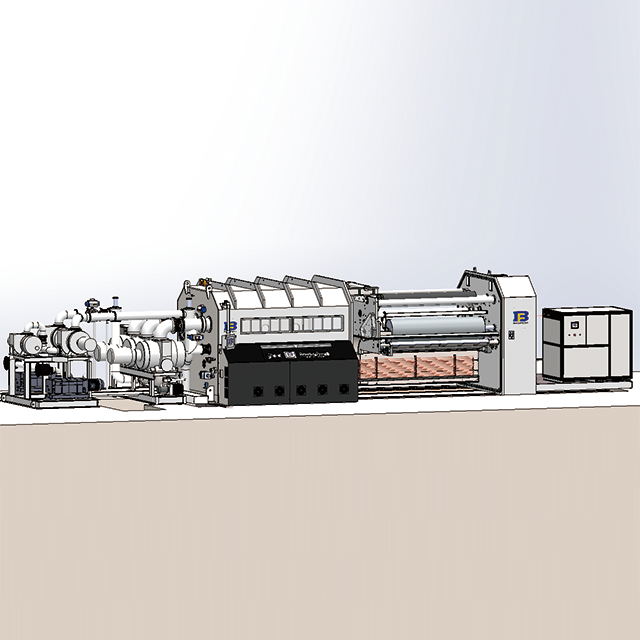
Free span systems handle heat management quite differently. They completely lack a chilled coating drum. Heat dissipation shifts entirely to the film itself. This thermal dynamic directly dictates maximum safe operating speeds. Operating a Free Span Metallizer requires exceptional parameter control. The evaporation boats radiate intense heat during deposition. If web speed exceeds thermal limits, the film will fail. It will stretch, wrinkle, or melt entirely.
Substrate-specific speed limits require your careful consideration. Different polymers react uniquely to intense radiant heat.
BOPP & BOPET: These films feature excellent thermal tolerance. They are highly capable of standard high-speed running. They resist thermal distortion under heavy aluminum deposition. You can push production speeds aggressively.
CPP & PE: These films remain highly thermal sensitive. They naturally require significantly lower running speeds. Specialized cooling zones help prevent severe web distortion. You must actively prevent thermal shrinkage during the deposition process. A loss of web modulus ruins the roll.
You must balance deposition rates against line speeds perfectly. Adjust your wire feed rates carefully. Modulate evaporation boat power to match your exact running speed. This precise balance achieves consistent aluminum thickness. It ensures you meet strict target barrier properties. Oxygen Transmission Rate (OTR) and Water Vapor Transmission Rate (WVTR) depend entirely on this consistency. Uneven deposition creates microscopic pinholes. These pinholes compromise the entire packaging barrier.
Vacuum system capacity plays a tremendously crucial role. Diffusion and cryo pumps must handle massive outgassing rates. High-speed film unwinding releases trapped moisture rapidly. It also releases entrapped air into the chamber continuously. Ensure your pumps can clear these gases instantly. Inadequate pumping slows down your entire line speed. If vacuum levels drop, coating quality degrades immediately. Proper pump sizing prevents this frustrating bottleneck.
The tension-to-width ratio introduces exponential production risks. Web wrinkling becomes highly probable on extremely wide webs. Scratching and edge weaving increase as running speed rises. Wide webs running fast create significant aerodynamic instability. The high-vacuum environment amplifies these physical web disturbances. Air cannot cushion the web as it travels between rollers. You must rely entirely on mechanical tension for web support.
Closed-loop tension requirements are absolutely non-negotiable. Digital load cells must monitor web tension continuously. Precision AC vector drives execute micro-adjustments instantly. Automated edge guiding systems prevent lateral web shifting effectively. These components work together to maintain pristine web geometry. They eliminate loose edges and tight tension bands. An open-loop system simply cannot react fast enough. Modern PI (Proportional-Integral) controllers predict tension deviations before they ruin the film.
Free span stability relies on optimal transport roller positioning. Assess the exact span distance between all transport rollers. Shorter spans significantly reduce dangerous web flutter. They improve aluminum adhesion uniformity at high velocities. Too much distance allows the web to wander freely. Tight spans keep the substrate perfectly flat across the evaporation zone. Flatness guarantees even optical density across the entire web width.
Balancing capacity constraints requires analyzing real operational trade-offs. Compare a 2450mm high-speed system against expected labor utilization. Evaluate energy usage per square meter of metallized film. Massive machines produce significantly more output per hour. However, they demand complex handling and much longer setup times. Narrower machines offer agility but require more frequent operator intervention. Choose the model aligning closest with your primary product mix.
Energy consumption metrics guide smart equipment selection effectively. Calculate kilowatts consumed per kilogram of metallized film. Evaluate the efficiency of the vacuum pumping sequence. Different chamber sizes require varying evacuation energies. Highly efficient pumps reduce your daily factory power load. Energy metrics often reveal the true efficiency of an engineering design. Look for intelligent standby modes that reduce power during roll changes.
Use a strict vendor evaluation checklist during your selection process. Do not rely on marketing brochures alone.
Request proven Factory Acceptance Test (FAT) protocols. Ensure they match your specific width and speed requirements.
Confirm availability of local OEM engineering support. Verify they stock spare evaporation boats and transport rollers nearby.
Demand robust software integration capabilities. The machine must feed data directly into your MES or ERP systems.
Review the specific pump-down time guarantees written in the contract.
Your next-step actions dictate the overall project success. Prepare representative film samples from your actual production lines. Specify precise trial parameters for the initial testing phase. Include these exact parameters in your Request for Quote (RFQ). Clear specifications eliminate vendor guesswork entirely. Require vendors to run your film at your target speed. Inspect the finished rolls for optical density and tension uniformity.
Specifying a metallizer is a careful, highly calculated process. Thermal limits and upstream compatibility dictate your ultimate success. Tension control remains an absolute priority for wide webs. It is never just a blind pursuit of the highest numbers. Speed means absolutely nothing if the resulting film distorts.
We strongly advise buyers to prioritize stable web handling. Precise heat management easily outperforms theoretical maximum running speeds. A highly stable machine delivers consistent, sellable product every shift. Unstable high-speed runs only generate massive amounts of expensive scrap material.
Contact technical sales today for expert application guidance. Download a specialized capacity calculation worksheet for your facility. Request a custom line-speed and width assessment from our engineering team. We will help you align your equipment perfectly for your factory.
A: Standard web widths typically range from 1200mm to 2450mm. The ideal choice depends directly on your primary extrusion output. Matching your metallizer width to your slitting and extrusion lines prevents excessive edge trim waste. 2100mm and 2450mm are common for high-volume commodity packaging runs.
A: Free span systems lack a cooling drum. The film absorbs all the heat generated during metal deposition. Therefore, free span speeds are calibrated to the film's specific thermal load limit. You must run heat-sensitive films like CPP slower to prevent thermal shrinkage and web distortion.
A: Yes, it heavily affects barrier properties. If you increase speed without adjusting the evaporation rate, the aluminum layer becomes too thin. This decreases optical density. Proper coordination between line speed and boat power is required to maintain consistent OTR and WVTR barrier performance.
A: You calculate actual output by multiplying line speed, web width, and film thickness. However, you must discount this theoretical maximum. Apply standard OEE discounts factoring in pump-down times, roll changeovers, and maintenance stops. A typical efficient machine operates at roughly 80% to 85% of theoretical capacity.