Views: 0 Author: Site Editor Publish Time: 2026-07-31 Origin: Site
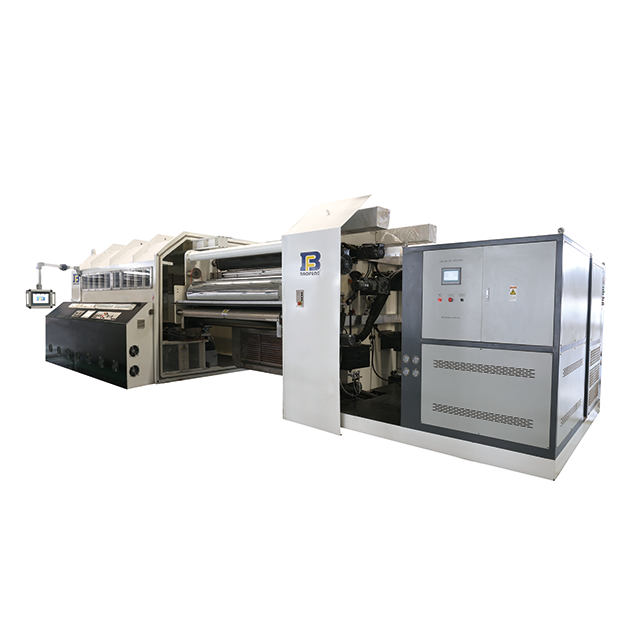
High-volume web converting and flexible packaging face immense pressure today. Escalating energy costs squeeze operational margins relentlessly. Simultaneously, tightening ESG compliance standards demand greener operational practices across the board. Traditional drum-based vacuum metallizing severely complicates these sustainability goals. These legacy systems require massive energy expenditures daily. They constantly battle continuous drum cooling while simultaneously managing heavy thermal evaporation loads. This fundamental conflict directly inflates operational expenses. You need a smarter approach to roll-to-roll production. The free span architecture emerges as a highly viable alternative. It completely shifts the thermal management paradigm in vacuum metallization. This innovative design offers measurable reductions in power consumption. It removes conflicting thermal zones entirely from the process. Furthermore, it easily supports thinner, heat-sensitive substrates without causing mechanical distortion. By reading this comprehensive guide, you will understand exactly how this equipment drives energy efficiency. You will learn to evaluate the architectural advantages and confidently navigate potential mechanical trade-offs.
Energy Efficiency: Eliminating the heavy cooling drum reduces continuous refrigeration requirements, directly lowering electrical overhead.
Thermal Efficiency via Induction: Free span designs paired with targeted induction heating localize energy use strictly to the evaporation zone.
Yield & Waste Reduction: Precise web handling of heat-sensitive films minimizes thermal degradation and substrate warping, compounding energy savings by reducing scrap.
Implementation Reality: Realizing these savings requires advanced tension control systems to compensate for the lack of a physical backing drum.
Legacy roll-to-roll vacuum metallization hides substantial operational costs. You often miss these hidden expenses on standard machinery specification sheets. The fundamental flaw lies in an ongoing, invisible thermal battle. Traditional systems waste vast amounts of energy every single production hour. They simultaneously superheat aluminum to extreme evaporation temperatures and aggressively chill a multi-ton process drum. This forces two opposing thermodynamic processes to fight inside the same enclosed vacuum chamber. You pay heavy electrical costs to heat the metal. You then pay again for the energy to remove that exact same heat from the chilled drum. This contradictory loop drains plant resources constantly.
Secondary energy drains compound this fundamental inefficiency significantly. Continuous water-cooling loops must run non-stop to protect the drum. Industrial refrigeration plants consume massive kilowatts just to maintain baseline temperature setpoints. Additionally, heavy process drums introduce immense mechanical inertia into the system. Drive motors require significant electrical power to simply accelerate these massive steel cylinders. Decelerating them during roll changes also burns unnecessary electrical energy. Furthermore, trapped moisture invariably forms on the cold drum surface. This prolongs chamber outgassing curves severely. It delays your pump-down times and forces vacuum pumps to work much harder. Ultimately, the physical presence of the drum acts as a massive thermal and mechanical anchor on your production efficiency.
Removing the central cooling drum fundamentally changes system energy dynamics. A Free Span Metallizer achieves measurable electrical savings through structural simplicity. By suspending the web entirely, you eliminate the largest parasitic energy load in the vacuum chamber. You no longer need heavy industrial chillers pumping coolant continuously. The refrigeration electrical load simply vanishes from your power consumption profile. This single architectural change alters the baseline energy requirements of the entire process.
This design synergizes beautifully with optimized heating ecosystems. Traditional resistance evaporation boats radiate heat indiscriminately. They warm the entire chamber environment. Conversely, free span web paths paired with induction heating focus energy precisely. Induction coils target the evaporation source exclusively. Ambient chamber heating drops significantly as a result. You only use power to melt the metal. You stop wasting power to heat the surrounding environment. This localized energy utilization proves far more efficient than widespread radiant heating.
Vacuum pump efficiency also improves markedly under this design. Without a multi-ton chilled drum, overall thermal mass decreases dramatically. A warmer, drum-free chamber holds far less surface condensation. Less condensation means significantly faster outgassing when pulling a vacuum. Your vacuum pumps achieve operating pressure much faster. Continuous vacuum maintenance loads decrease steadily during the run. You easily save hours of pump-down time weekly. These incremental electrical savings add up quickly over a rigorous annual production schedule.
The packaging industry increasingly favors sustainable, ultra-thin polymer films. Operational shifts now prioritize substrates like BOPP, PET, and PE. We routinely see production runs demanding films well under 12 microns. Handling these delicate webs presents significant challenges for legacy equipment. Heavy drums often stretch or distort these fragile materials under standard tension limits. Traditional physical contact frequently leads to web snapping or micro-tearing.
Managing thermal loads without a physical backing drum seems counterintuitive initially. However, the free span architecture handles intense heat uniquely. Radiant heat simply passes straight through transparent and translucent webs. In traditional systems, the solid backing drum traps this heat violently against the film surface. This trapped energy often causes severe film distortion and melting. By suspending the film freely, radiant energy escapes harmlessly into the open chamber space. The substrate remains highly stable, perfectly flat, and structurally sound throughout deposition.
We must view production scrap as a highly critical energy metric. Wasted film inherently represents wasted electricity. Every scrapped roll contains the energy used to pump down the chamber originally. It holds the energy used to heat the metal sources. It wastes the energy consumed by the web drive motors. Producing less scrap inherently lowers wasted energy per square meter of output. A highly precise Free Span Metallizer maximizes your production yield effectively. Producing more sellable metallized film directly improves your overall energy-to-product ratio. It is a compounding efficiency win.
Adopting any new process architecture carries inherent engineering challenges. A skeptical lens builds necessary trust when evaluating free span technology. You must understand the specific mechanical trade-offs before investing capital. Suspending the web introduces highly complex web tension realities. Without a backing drum, the substrate lacks physical support completely through the deposition zone. The film floats between rollers.
To maintain perfect stability, you rely entirely on advanced electronic control. This requires highly sophisticated, ultra-responsive servo drives. Advanced tension control software must compensate for the missing physical drum in real-time. The control algorithms utilize rapid PID loops to adjust roller speeds micro-second by micro-second. Without this exact control, wrinkling or catastrophic web breaks will halt production immediately. Physical mechanics give way to digital precision.
Consider the following operational realities when planning implementation:
Operator Adoption Curve: Transitioning from traditional drum systems requires highly specialized training. Operators must learn entirely new web handling paradigms. Visual cues for tension adjustments differ significantly in a free span environment.
Tension Sensor Calibration: Rigorous alignment and frequent calibration of load cells become strictly mandatory. The system cannot forgive mechanical misalignments. Sensor drift will ruin web tension profiles quickly.
Maintenance Shifts: You eliminate rotary union repairs and messy cooling leak risks entirely. However, you trade them for highly technical electrical and sensor maintenance protocols.
You must ensure your maintenance team possesses strong mechatronic troubleshooting skills. Shifting from heavy mechanical repairs to precision sensor calibration requires a very specific technical mindset.
Selecting the right original equipment manufacturer demands a rigorous evaluation framework. You cannot rely on generic marketing brochures or theoretical promises. You need hard data and provable performance metrics. The transition away from drum cooling requires verified architectural stability. Procurement teams must ask highly technical questions.
Use the following criteria when evaluating vendors for free span equipment:
Request specific kilowatt-hour consumption data per kilogram of aluminum evaporated. Reject vague or generalized "energy-saving" percentage claims.
Evaluate the exact precision of the web handling software. Ask deep questions about their proprietary tension control algorithms and servo response times.
Assess the induction heating system design closely. Confirm it genuinely isolates thermal energy from the outer chamber walls effectively.
During the Factory Acceptance Test (FAT), demand incredibly strict testing protocols. Bring your thinnest, most extremely heat-sensitive substrates. Run sample rolls at full intended production speeds. This is the absolute only way to verify tension control under actual thermal loads. Look closely for any subtle signs of telescoping, minor wrinkling, or edge thermal degradation. Do not accept simulated runs.
Finally, heavily scrutinize network integration capabilities. A modern production machine must communicate seamlessly with your plant. Assess whether the OEM’s digital control ecosystem integrates smoothly. It needs to link directly with existing SCADA systems or ERP software. This integration proves absolutely essential for tracking your ongoing energy savings. You need real-time dashboards proving the electrical consumption reductions.
Below is a brief comparison to help visualize the major operational shifts.
Evaluation Category | Legacy Drum-Based Systems | Free Span Architecture |
|---|---|---|
Thermal Energy Focus | High chamber heating; requires massive chilling | Localized induction heating; no chill drum needed |
Primary Maintenance | Rotary unions, coolant leaks, drum polishing | Servo calibration, tension sensor alignment |
Thin Film Handling | Prone to thermal trapping and distortion | Radiant heat passes through, maintaining stability |
Pump-Down Efficiency | Slower due to chilled drum moisture condensation | Faster due to lower thermal mass and dry chamber |
The energy-saving advantage of a free span metallizer represents a tangible structural reality. It is definitely not just another hollow marketing claim. Eliminating the conflicting thermal processes changes everything about your utility footprint. You no longer pay heavy electrical fees to heat metal while simultaneously chilling a massive process drum. This fundamental architectural shift permanently lowers your baseline electrical consumption. It simplifies your vacuum chamber environment drastically.
We strongly encourage production engineers and procurement teams to dig deeper. Conduct a comprehensive lifecycle operational expenditure comparison. Combine the projected electrical energy reductions with expected scrap reduction metrics. Compare these combined financial savings directly against your current drum systems. You must perform this rigorous data analysis before finalizing any capital expenditure approval. A well-implemented Free Span Metallizer frequently demonstrates a surprisingly rapid return on investment based purely on utility and waste reduction alone.
A: Facilities often see a 20% to 35% reduction in overall system energy consumption. Eliminating continuous refrigeration accounts for the largest immediate drop. Optimized induction heating further improves overall electrical efficiency. However, actual savings depend heavily on your specific production speed and substrate type. Thinner films run at higher speeds typically yield the most dramatic proportional savings.
A: Free span systems excel naturally at handling thin, heat-sensitive films. Running thick, rigid, or highly opaque materials requires careful engineering evaluation. Heavy substrates demand much higher tension forces. Without a physical backing drum, sustaining this high tension demands extremely powerful servo drives. Always test heavy materials during FAT to ensure web tension limits meet your operational requirements.
A: No, it does not. Modern free span systems utilize highly advanced plasma pre-treatment technology. This process cleans and activates the film surface perfectly before metallization. Optimized deposition zones ensure extremely high surface energy. As a direct result, you achieve excellent metal adhesion without needing conductive cooling from a traditional chilled drum.