Views: 0 Author: Site Editor Publish Time: 2026-09-12 Origin: Site
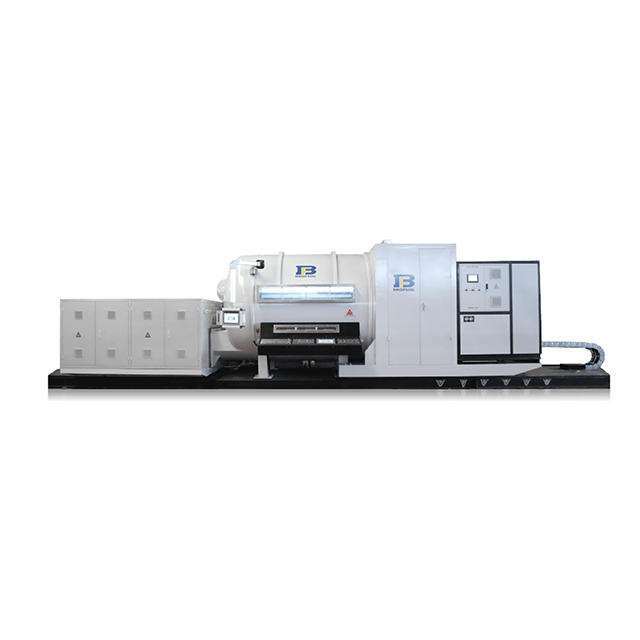
Meeting the stringent 2026 regulatory and performance standards for defense optics, non-invasive surgical lasers, and flexible packaging requires thin-film deposition with exact refractive indices and superior environmental resistance. Standard vacuum coaters often fail to handle the specific thermal and sublimation properties of Zinc Sulfide (ZnS). The increasing demand for high-performance infrared (IR) optics, transparent barrier films, and advanced medical diagnostics pushes manufacturers beyond the limitations of traditional aluminum metallization and standard thermal spray coatings. Investing in a dedicated ZnS Metallizer allows facilities to scale the production of high-index optical coatings and functionalized films. This guide breaks down the technical applications, equipment evaluation frameworks, and implementation realities for integrating ZnS vacuum coating systems into modern production lines.
Application Shift: By 2026, ZnS metallizers will be critical not just for industrial optics, but for scaling transparent barrier packaging and high-contrast holographic films.
Performance Advantage: ZnS provides a high refractive index and excellent transmission in the IR spectrum, making it superior to traditional metals for thermal imaging, precision lenses, and medical laser applications.
Evaluation Focus: Procurement decisions must prioritize deposition uniformity, vacuum pump-down speeds, and specialized thermal management systems designed specifically for ZnS sublimation.
Risk Mitigation: Successful adoption requires strict protocols for material handling, chamber maintenance to prevent cross-contamination, and precise substrate temperature control.
Traditional thermal spray coatings optimize for metals that melt and evaporate. Standard aluminum vacuum metallizers operate on similar principles, heating a metal wire or pellet until it liquefies and then vaporizes. Zinc sulfide behaves entirely differently under thermal stress. It sublimates. The material transitions directly from a solid state to a gaseous state, bypassing the liquid phase completely. This physical property requires specialized high-vacuum chamber designs. Standard equipment struggles with material spitting during sublimation. When a solid chunk of ZnS heats unevenly in a standard open boat, thermal gradients cause the material to fracture. Solid particles eject from the source and strike the substrate, causing pinholes, optical defects, and rejected batches. Dedicated systems prevent these defects by utilizing complex source architectures that trap solid particles while allowing the vapor to escape.
The physical vapor deposition (PVD) process for zinc sulfide demands precise thermal and pressure control. Operators heat the solid source material using specialized resistive boats or crucibles, typically machined from molybdenum or tantalum. The material vaporizes at specific temperature thresholds, generally between 900 and 1100 degrees Celsius. Inside the chamber, the vacuum pumps pull the environment down to at least 10^-5 Torr. At this pressure, the mean free path of the vaporized molecules extends significantly. The gas molecules travel in straight lines without colliding with residual air molecules. Upon reaching the cooler substrate surface, the vapor condenses instantly. This condensation forms a highly dense, uniform dielectric film. The process adapts to rigid materials like optical glass and germanium, as well as flexible polymer webs used in advanced packaging.
Comparing zinc sulfide to traditional aluminum highlights distinct operational differences on the production floor. Aluminum creates opaque, highly reflective, and conductive layers. Zinc sulfide forms transparent, dielectric films with a high refractive index. The vacuum requirements for sublimation exceed those needed for simple evaporation. Operators must maintain strict base pressures to prevent oxidation and moisture contamination, which can severely degrade the optical transmission of the final ZnS layer. We outline these key distinctions in the comparison table below.
Feature | Zinc Sulfide (ZnS) | Aluminum (Al) |
|---|---|---|
Optical Properties | High refractive index (2.2 - 2.3), transparent, high IR transmission | High reflectivity, opaque, blocks visible and IR light transmission |
Functional Properties | Dielectric, insulating, high mechanical durability, scratch resistant | Conductive, prone to rapid oxidation without protective topcoats |
Process Requirements | Sublimation control, baffled sources, strict high-vacuum thresholds | Direct melting, standard open evaporation boats, faster cycle times |
Primary Substrates | Precision optics, IR windows, clear barrier packaging, medical lenses | Standard mirrors, reflective packaging, decorative automotive trims |
Zinc sulfide serves as a primary high-index material in multi-layer optical coatings. Engineers apply these complex thin-film stacks to precision lenses and mirrors to control how light behaves. The material significantly enhances anti-reflective (AR) coatings. By alternating layers of high-index ZnS with low-index materials like magnesium fluoride, optical designers create interference filters that cancel out reflected light waves. Beam splitters rely on these exact layers for accurate wavelength separation in surveying equipment and laser targeting systems. The high refractive index allows designers to achieve the desired optical performance with fewer total layers. Fewer layers reduce the overall mechanical stress on the coating stack, which prevents delamination and improves component durability in harsh operational environments.
Defense contractors manufacture precision lenses for thermal diagnostic tools using this technology. Thermal imaging operates primarily in the mid-wave infrared (MWIR, 3-5 µm) and long-wave infrared (LWIR, 8-12 µm) bands. Zinc sulfide transmits exceptionally well across these wavelengths. Comparing ZnS and ZnSe (Zinc Selenide) windows reveals distinct application advantages on the battlefield and in the operating room. Zinc sulfide provides exceptional mechanical durability and hardness. It resists scratching and pitting from sand, rain, and debris. This makes it the standard choice for external windows on military vehicles, naval targeting pods, and unmanned aerial systems. ZnSe offers slightly lower absorption in specific IR bands but lacks environmental ruggedness. Engineers reserve ZnSe for internal, protected precision lens applications within sealed surgical lasers or laboratory spectrometers.
The packaging industry is rapidly transitioning from opaque aluminum to transparent barrier films. Food and pharmaceutical brands require clear packaging because consumers want visual confirmation of the product inside. However, the packaging must still maintain strict moisture and oxygen barriers to prevent spoilage. A dedicated ZnS Metallizer deposits these clear dielectric layers efficiently onto rolls of PET or BOPP film. The resulting material achieves excellent Oxygen Transmission Rate (OTR) and Water Vapor Transmission Rate (WVTR) metrics while remaining completely transparent. The process also creates high-contrast, transparent holographic security features. These optical features protect premium brands and pharmaceuticals against sophisticated counterfeiting operations. The transparent nature of the film allows underlying barcodes, QR codes, and branding to remain perfectly visible to scanners and consumers.
Emerging 2026 applications focus heavily on superior mechanical stability and corrosion resistance for functional surfaces. Manufacturers integrate zinc oxide to produce time-sequential functionalized ZnS-ZnO films. These advanced surfaces offer remarkable self-cleaning and non-adhesion properties. The photocatalytic mechanism of these films breaks down organic contaminants when exposed to specific light wavelengths. Antibacterial characteristics make them highly valuable for industrial and medical environments. Hospitals apply these coated surfaces to high-touch areas and surgical lighting to reduce hospital-acquired infections. Industrial facilities apply them to optical sensors exposed to harsh chemical environments, ensuring the sensors remain clear and functional without constant manual cleaning.
Sublimation requires highly specialized source designs to maintain film quality. Standard evaporation boats fail quickly when processing zinc sulfide. Baffled boats or custom crucibles prevent macro-particle ejection. The baffles force the vapor to navigate a winding, tortuous path before escaping into the chamber. This physical barrier stops solid chunks from reaching the substrate and ruining the film. Operators use quartz crystal microbalances (QCM) for real-time deposition monitoring. These sensors sit inside the chamber and track mass accumulation at the microgram level by measuring the shift in the crystal's resonant frequency. For complex optical stacks, facilities also integrate optical monitoring systems. These systems shoot a specific wavelength of light through a test glass during the coating run, stopping the deposition exactly when the film reaches the correct optical density and transmission cut-off.
High-purity optical coatings demand stringent base pressure thresholds. Moisture management remains the most critical factor during the initial pump-down phase. Water vapor acts as a severe contaminant in optical films. It alters the refractive index, causes poor adhesion, and leads to premature coating failure under humidity testing. Facilities must carefully evaluate roughing and high-vacuum pump configurations. Cryopumps often outperform turbomolecular pumps in handling water vapor for batch optical coaters. Cryopumps capture gases by freezing them onto a cryo-array cooled to 15 Kelvin. Because they freeze the moisture rather than trying to compress and exhaust it, they pump water vapor significantly faster than turbos. Proper pump selection ensures rapid cycle times and guarantees consistent vacuum levels across multiple production shifts.
Substrate handling mechanisms dictate the final quality of the film. Flexible substrates require advanced cooling drum technologies. Web coating processes generate significant radiant heat from the evaporation sources. This heat can cause severe thermal deformation, wrinkling, or melting in polymer films like PET. Chilled drums dissipate this thermal load effectively. Advanced web tension control systems, utilizing load cells and precision servo motors, keep the polymer flat and tight against the cooling drum. Rigid optics require the exact opposite approach. Substrate heating capabilities ensure optimal film adhesion. Heating the glass or germanium substrates to 150-200 degrees Celsius before deposition drives off surface moisture. It also gives the condensing ZnS molecules enough thermal energy to move around on the surface, forming a denser, harder film. Proper thermal management directly impacts multispectral transmission rates and prevents the film from crazing under environmental stress.
Zinc sulfide condensation on chamber walls poses a significant operational risk. The vapor does not only coat the substrate; it coats everything inside the vacuum chamber. Over multiple runs, this built-up material becomes thick and brittle. It eventually flakes off due to the thermal cycling of the chamber heating and cooling. The flaking causes severe particulate contamination, leading to extended machine downtime and scrapped product. Facilities mitigate this by installing removable stainless steel chamber shielding. Maintenance teams swap these shields quickly between production runs. They clean the dirty shields offline using specific solvents and bead blasting techniques to strip the ZnS buildup. Optimized preventative maintenance schedules prevent excessive material accumulation. Dedicated cleaning protocols keep the chamber environment pristine and maximize machine uptime.
Utilizing the same chamber for multiple materials degrades optical film purity. Mixing zinc sulfide with metals like aluminum or copper ruins the dielectric properties of the final product. Even microscopic amounts of cross-contamination alter the refractive index unpredictably and cause the films to fail optical transmission tests. Manufacturers must dedicate specific batch chambers solely to zinc sulfide processing. For high-volume web applications, highly isolated, multi-zone continuous coaters offer a viable solution. These advanced systems prevent cross-contamination between different deposition zones by utilizing specialized vacuum isolation valves and differential pumping stages. This architecture maximizes production flexibility, allowing a single machine to deposit a metal layer and a ZnS layer sequentially without compromising film quality.
Operators must understand the specific safety and handling protocols for zinc sulfide. While stable in its solid pellet or granular form, the fine dust generated during chamber cleaning requires strict management. Facilities must install appropriate exhaust filtration systems on the roughing pumps to capture any particulates pulled from the chamber. Cleanroom environments demand strict airflow management to prevent dust migration during shield changes. Proper training ensures operators handle the evaporant safely, using appropriate respirators and HEPA vacuums during maintenance. Strict handling procedures also prevent accidental contamination of the source material with skin oils or moisture before the deposition cycle begins.
Evaluate the track record of original equipment manufacturers carefully before committing capital. Look for proven success in both precision optical batch coating and roll-to-roll vacuum metallizing. Hardware alone does not guarantee success. Vendor-supplied process recipes accelerate your time to market significantly. Application engineering support remains crucial during the initial production ramp-up phase. Reliable vendors provide hands-on training for complex sublimation processes. They help your operators understand the nuances of high-vacuum physics, such as adjusting the baffled source temperatures for your specific substrate thickness. They also assist in tuning the PID loops on the QCM controllers to ensure repeatable deposition rates.
Medical device manufacturing requires strict adherence to ISO 13485 standards. Defense optics must meet rigorous MIL-SPEC environmental requirements, such as MIL-C-675 for severe abrasion and adhesion, or MIL-F-48616 for optical interference coatings. Your chosen equipment must support these strict compliance frameworks through precise process control and repeatability. Factory Acceptance Testing (FAT) validates machine performance before final delivery. Demand documented proof of coating uniformity and optical density during the FAT. Do not accept delivery until the machine proves its capabilities using your actual production materials.
A rigorous FAT protocol should include the following validation steps:
Pump-down verification to ensure the system hits the required base pressure within the specified time limit.
Heating uniformity checks across the entire substrate dome or web width using calibrated thermocouples.
Dynamic deposition runs using the specified baffled crucibles and your exact ZnS source material.
Optical spectrometer testing on the finished samples to verify transmission bands match engineering tolerances.
Adhesion testing using standard MIL-SPEC tape peel methods to confirm film durability.
Consider the integration of automation and data logging into your procurement specifications. Modern vacuum systems require sophisticated software interfaces. Operators need real-time data on vacuum pressure, source temperature, deposition rates, and cooling water flow. Automated recipe management prevents human error during complex multi-layer coating runs, ensuring every batch matches the validated baseline. Data logging provides crucial traceability for aerospace and medical components, recording the exact parameters of every second of the coating cycle. Ensure the equipment software integrates smoothly with your existing manufacturing execution systems for seamless production tracking.
Define your target film specifications, including physical thickness, refractive index, and exact transmission rates across your required wavelengths.
Calculate your required production volumes and substrate sizes to determine if a batch coater or a roll-to-roll web system fits your floor best.
Request sample coating runs from shortlisted equipment manufacturers using your actual substrate materials to verify their process capabilities.
Establish a dedicated cleanroom footprint specifically designed for high-vacuum sublimation equipment, including proper HVAC and exhaust routing.
Develop a comprehensive preventative maintenance schedule focused on chamber shield management and bead blasting protocols before the machine arrives.
A: It is specialized vacuum equipment designed to deposit thin layers of zinc sulfide onto various substrates. Manufacturers use it to create high-index optical coatings, infrared lenses, and transparent barrier films for packaging. The machine utilizes physical vapor deposition to sublimate the material under high vacuum.
A: Aluminum metallizing produces highly reflective, opaque, and conductive layers. Zinc sulfide coating creates transparent, dielectric films with a high refractive index. The zinc sulfide process requires stricter vacuum conditions and precise thermal control because the material sublimates rather than melts.
A: Thermal spray melts metal wire or powder and propels it onto a surface in an open environment. Vacuum metallizing occurs inside a sealed chamber under high vacuum. The vacuum process allows zinc sulfide to sublimate into a vapor, creating ultra-thin, precise optical films impossible to achieve with thermal spray.
A: Zinc sulfide offers a high refractive index and excellent transmission across the infrared spectrum. Engineers use it in multi-layer thin-film stacks to build anti-reflective coatings and beam splitters. Its optical properties allow precise manipulation of light in complex lens systems and high-precision mirrors.
A: Zinc sulfide provides superior mechanical durability and broader multispectral transmission from visible to long-wave infrared. This makes it ideal for rugged defense environments and external windows. Zinc selenide offers lower absorption in specific IR bands, making it better suited for internal precision lenses in surgical lasers.
A: The primary challenge is managing sublimation. The material transitions directly from solid to gas, which can cause macro-particles to spit onto the substrate, ruining the film. Additionally, vapor condenses on chamber walls, requiring strict maintenance and removable shielding to prevent flaking and particulate contamination.