Views: 0 Author: Site Editor Publish Time: 2026-07-27 Origin: Site
Investing in industrial vacuum coating equipment represents a high-stakes capital expenditure decision. This holds particularly true when you process ultra-thin or highly heat-sensitive substrates. You must ensure your machinery handles delicate materials flawlessly without causing unnecessary downtime.
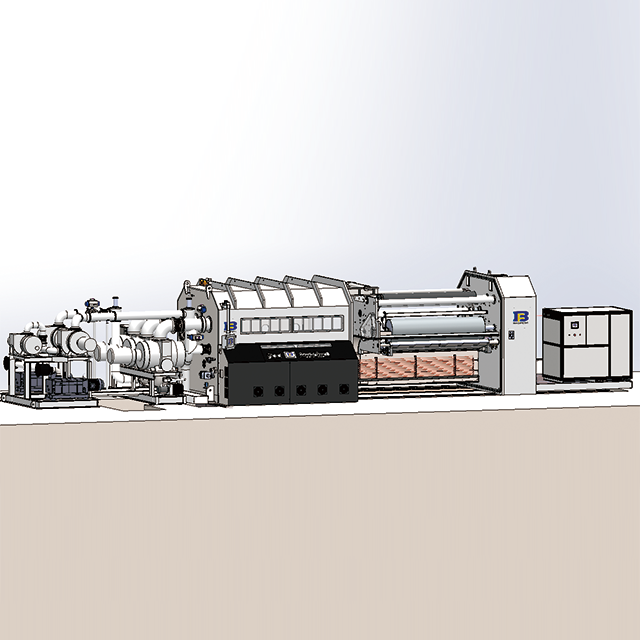
Traditional drum metallizers frequently fail when operators run sub-5-micron films. The constant physical contact causes thermal distortion, severe wrinkling, and unwanted surface scratching. A Free Span Metallizer effectively solves these persistent issues by completely eliminating drum contact over the sensitive evaporation zone.
Before committing to a specific manufacturer or specification, technical buyers must conduct thorough equipment evaluations. You need to assess web handling capabilities and thermal management systems rigorously. Doing so ensures your new equipment aligns perfectly with your specific production realities and protects your long-term investment.
Application Fit: Free span metallizers are non-negotiable for ultra-thin (e.g., 2-3 micron) and heat-sensitive films where traditional chill roll contact causes defects.
Web Tension is Critical: Without a support drum, investment must heavily prioritize advanced, closed-loop tension control systems to prevent web breaks and wrinkling.
Thermal Management: Evaluate the evaporation source (e.g., induction heating vs. resistance boats) based on its ability to minimize radiant heat transfer to the unsupported web.
Vendor Accountability: Prioritize vendors offering robust Factory Acceptance Testing (FAT) and verifiable uptime guarantees.
Production managers often face significant yield losses using traditional equipment. You must systematically assess your current waste levels. Traditional machines drag thin films over heated drums continuously. This friction generates static electricity. It also scratches delicate surfaces instantly. High thermal loads melt or distort sensitive materials during the process. You face mounting scrap rates when processing advanced films.
Defining your material threshold establishes clear equipment requirements. Free span architecture specifically handles ultra-thin BOPP, PET, and advanced capacitor films. These delicate substrates simply cannot withstand physical contact. They easily break or warp during the high-heat evaporation phase. A Free Span Metallizer completely avoids this hazardous contact. It suspends the film mid-air while depositing the metal layer.
Quality versus speed trade-offs matter significantly in this decision. Eliminating drum contact prevents surface defects effectively. However, it introduces complex web handling challenges. You must justify these complexities based on your market. Premium end products demand flawless coatings. Electronics and specialized packaging fall directly into this category. They require absolute perfection. You trade simple operation for superior, high-margin product quality.
The underlying physics of free span systems create unique operational risks. The film remains entirely unsupported directly above the evaporation source. Gravity pulls the material downward constantly. Extreme heat causes rapid material expansion. These combined forces threaten web stability. The lack of physical backing means tension alone holds the film flat.
Drive and control systems require extreme precision to counter these forces. You need robust architectures to maintain perfect order. Industry best practices recommend evaluating these three core components:
Multi-zone tension control: Isolate distinct machine zones effectively to manage localized stress.
High-precision load cells: Monitor minute force changes continuously across the entire web width.
AC vector or servo drives: Execute rapid corrective movements to maintain consistent tension parameters.
Wrinkle prevention remains absolutely crucial for uniform coating. You must evaluate the inclusion of advanced spreader rollers. Manufacturers typically install bowed rollers before the evaporation zone. They place active tracking rollers immediately after the zone. These specialized devices stretch the web perfectly flat. They eliminate microscopic creases before metallization occurs.
Implementation risk remains incredibly high without these controls. Poor tension control leads directly to violent web flutter. Flutter ruins coating uniformity completely. It also causes catastrophic web breaks. Breaking a film inside a vacuum chamber halts production entirely. Operators spend hours cleaning the resulting mess. Precision closed-loop tension eliminates this expensive downtime risk.
Managing radiant heat dictates your overall coating success. Traditional machines use massive chill drums to absorb excess heat. Free span systems lack this luxury entirely. They have no chill drum. Therefore, the system must precisely control emitted heat from the source. Evaporation sources radiate intense energy upward. You must protect the delicate suspended film from thermal overload.
Heating source selection drastically affects system performance. You must evaluate induction heating against traditional resistance heating carefully. Induction heating offers rapid response times. It creates highly uniform temperature profiles across the web. More importantly, it reduces radiant heat load on the unsupported substrate. Resistance boats often emit excess stray heat, damaging thin films.
Crucible design also matters immensely to the final product. Assess crucible geometry carefully during vendor demonstrations. Check their spacing across the machine width. Proper spacing guarantees uniform metal vapor distribution. It prevents concentrated hot spots. Hot spots instantly melt ultra-thin capacitor films.
Cooling systems integration secures your final product quality. You must review post-evaporation cooling efficiency thoroughly. Advanced cooling zones rapidly stabilize the film. They remove residual heat quickly. This critical stabilization happens before rewinding begins. Hot film stretches and ruins the finished roll. Effective cooling prevents this outcome completely.
Table: Heating Source Technology Comparison Chart
Technology Type | Heat Distribution | Response Time | Impact on Thin Films |
|---|---|---|---|
Induction Heating | Highly uniform across width | Rapid adjustments | Minimal radiant damage |
Resistance Boats | Prone to localized variations | Slower stabilization | High risk of thermal distortion |
Pump-down times dictate your Overall Equipment Effectiveness (OEE). Assess the exact capacity of the vacuum pumping group. Look at the entire configuration closely. You need powerful roughing pumps to clear initial atmosphere. Diffusion pumps must handle high gas loads efficiently. Cryochillers trap unwanted water vapor rapidly. Faster pump-down times directly increase your active daily coating hours.
Consumables and maintenance procedures drive your overall operational efficiency. You should analyze specific maintenance requirements before purchasing. Keep an eye on these critical daily tasks:
Analyze the exact frequency required for crucible replacement.
Evaluate the reliability of aluminum wire feeding mechanisms.
Determine how often operators must clean the evaporation shields.
Assess the ease of physical operator access into the chamber.
Routine maintenance requires excellent ergonomic access. Complex machines frustrate technicians unnecessarily. They extend planned downtime significantly. Clear access ports around the evaporation zone speed up cleaning. Fast turnaround times keep your production schedules on track.
Energy consumption impacts your long-term operational costs constantly. Factor in the electrical load heavily. Heating sources draw massive power continuously. Vacuum pumps run non-stop during production. You must model long-term energy use accurately. High-efficiency components usually justify higher initial capital prices. They save significant utility expenses over the equipment's lifespan.
Demonstrated expertise separates true partners from mere equipment suppliers. Demand relevant case studies immediately during initial discussions. Request active reference sites from the vendor. They must prove successful deployments of free span equipment. They need specific experience processing your exact substrate profiles. Do not accept generic examples or theoretical capabilities.
Factory Acceptance Testing (FAT) protocols require strict definitions early. Site Acceptance Testing (SAT) proves equally important for final validation. Define clear pass or fail criteria before signing contracts. The machine must run your specific film smoothly. It must hit target production speeds consistently. Validate these metrics before authorizing the final shipment.
Safety and compliance serve as non-negotiable evaluation elements. Verify strict adherence to international safety standards explicitly. Look for documented CE, UL, or OSHA equivalents. These machines utilize potentially dangerous high-voltage induction systems. They operate as massive vacuum pressure vessels. Strict regulatory compliance protects your operators and facility.
Aftermarket support guarantees your long-term production success. Evaluate localized spare parts availability rigorously. Test their remote diagnostic capabilities during the vendor audit. Demand clear Service Level Agreements (SLAs) for field service technicians. Delayed support costs thousands of dollars in lost production daily.
Defining exact process parameters structures your technical request perfectly. Clear parameters prevent vendor confusion. They also ensure accurate equipment sizing. Clearly state your maximum web width requirements. Provide the exact thickness range you expect to process. Detail the substrate materials accurately, including any special coatings. Specify your required optical density (OD) targets. Finally, list your target line speed realistically.
You must compare control architectures carefully across shortlisted vendors. Mandate open-architecture PLC and HMI systems in your RFQ. Closed, proprietary systems create permanent vendor lock-in. This limits your future flexibility. Open systems allow your internal engineers to modify parameters safely. They ease seamless integration into existing factory MES or ERP platforms. Unified data flow improves overall factory intelligence.
Avoid relying solely on basic marketing materials. Request detailed engineering drawings of the web path. Ask for explicit performance guarantees regarding tension variation percentages. By formalizing these technical demands, you force vendors to commit to hard performance numbers. This structured logic eliminates unqualified suppliers immediately.
Investing in a Free Span Metallizer represents a highly strategic move. It allows you to dominate high-margin, thin-film markets successfully. However, this investment requires rigorous technical vetting. You must scrutinize tension controls and thermal management deeply.
Move completely beyond glossy brochure specifications. Base your final purchasing decision on physical web trials. Run your actual production materials through the demonstration machine. Validate tension stability personally. Verify coating uniformity under real-world conditions to ensure success.
Demand real-world material trials using your specific sub-5-micron films.
Prioritize advanced closed-loop tension systems to eliminate web breaks.
Ensure open-architecture software integration for future-proof factory data connectivity.
Focus heavily on robust, localized aftermarket support and rapid spare parts availability.
A: A high-quality free span metallizer handles films down to 2-3 microns. This capability depends heavily on the specific substrate material and the precision of the closed-loop tension system. Advanced load cells prevent delicate ultra-thin films from snapping.
A: Induction heating provides incredibly precise temperature control. It generates far less ambient heat radiation compared to resistance boats. This lower radiant heat load makes induction heating perfectly suited for highly heat-sensitive webs, preventing thermal distortion.
A: Free span systems lack the physical support of a chill drum in the deposition zone. Without this backing, gravity and thermal expansion cause unsupported films to flutter or crease. Precise tension control remains the only mechanism keeping the web flat.
A: Operators primarily manage the frequent cleaning of evaporation shielding. Metal vapor coats these interior surfaces rapidly. Additionally, technicians must meticulously manage continuous wire feed mechanisms and monitor crucible wear to maintain consistent coating uniformity.