Views: 0 Author: Site Editor Publish Time: 2026-06-29 Origin: Site
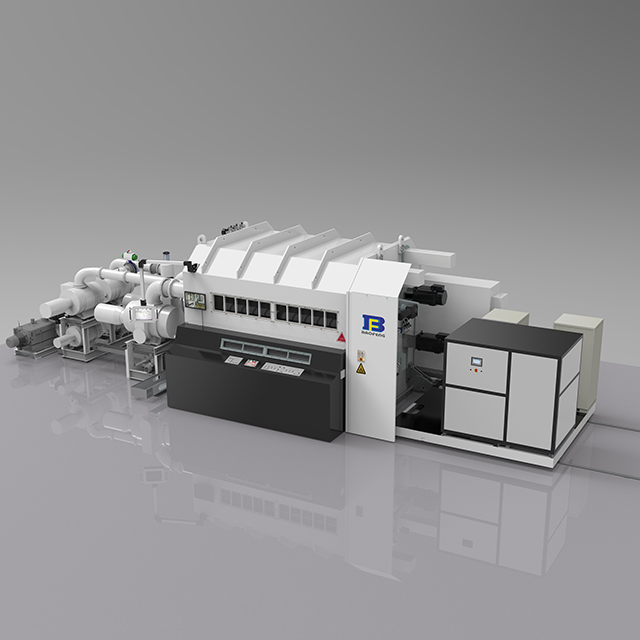
High-barrier flexible packaging demands precise metallization. However, the true operational challenge lies elsewhere. It involves how seamlessly you integrate this step into the broader manufacturing process. Converters and packaging manufacturers face a critical choice. They must decide exactly where and how to implement a Roll to Roll Metallizer. This decision dictates production bottlenecks. It influences material waste limits. Ultimately, it determines the optical and barrier quality of the finished roll.
This guide breaks down the structural placement of metallizing within the packaging workflow. We will compare integration models. We will evaluate specific equipment criteria. We will also identify real-world production risks. You will discover practical methods to optimize your web tension and thermal management strategies. Read on to master the complexities of modern film metallization.
Process Placement: Metallization sits directly between substrate extrusion/treatment and downstream laminating/slitting; its placement dictates overall web tension and thermal management strategies.
Integration Models: The choice between offline (standalone) and in-line metallizing impacts CAPEX, line speed matching, and changeover flexibility.
Equipment Evaluation: A high-yield roll to roll metallizer must be evaluated on its vacuum efficiency, cooling drum performance, and precision in maintaining consistent Optical Density (OD).
Risk Mitigation: The most common failure points—web breaks and poor metal adhesion—can be engineered out through proper plasma pre-treatment and closed-loop tension control.
Adding a metallizing step introduces a profound shift in production environments. You are injecting a deep vacuum environment and intense thermal stress into an otherwise continuous atmospheric web process. Misaligning this integration disrupts throughput across the entire facility. A bottleneck at the metallization stage forces downstream converting machines to idle. It simultaneously limits upstream extrusion output. You must seamlessly bridge these distinct operational environments to maintain steady yield.
Surface preparation establishes the foundation for success. You must apply plasma or corona treatment before depositing aluminum. This treatment modifies the surface energy of the film. Industry standards require raising the surface energy to specific dyne levels, typically between 38 and 42 dynes/cm. Without sufficient surface energy, metal adhesion fails completely. Furthermore, you must understand substrate behavioral differences under vacuum stress.
BOPP (Biaxially Oriented Polypropylene): This substrate is highly heat-sensitive. It shrinks rapidly upon facing sudden temperature spikes because the thermal load relaxes its biaxial orientation.
PET (Polyethylene Terephthalate): This material offers robust thermal stability. It handles higher deposition rates effectively without severe dimensional distortion.
CPP (Cast Polypropylene): This film is highly extensible and soft. It requires extremely precise tension isolation to prevent stretching and web deformation during the metallizing process.
Cooling and rewinding logic determine the final quality of the master roll. The newly metallized film carries an ultra-thin aluminum layer, often measuring just tens of nanometers thick. Transitioning this roll to slitting, laminating, or printing requires meticulous care. Aggressive handling scratches the fragile barrier. Proper cooling drum engagement prevents thermal blocking inside the wound roll. You must extract the heat before the layers press together in the rewinder.
Evaluating the architectural setup of the metallizing equipment within your facility is crucial. Your layout and product mix dictate the optimal approach. The industry categorizes these solutions into two primary models. Each model presents distinct advantages and operational compromises.
This configuration couples extrusion, coating, and metallizing into one unbroken sequence. It represents a massive, synchronized production line.
Pros: You reduce physical roll handling dramatically. Contamination risks drop because the web never leaves the controlled environment. You can apply protective top-coats immediately after metallization. This works exceptionally well for producing in-line coated high-barrier BOPP.
Cons: This setup demands extremely high initial capital expenditure. Synchronization involves complex drive controls. If the metallizer faults or requires maintenance, the entire extrusion and coating line halts completely.
This configuration decouples the vacuum process from the atmospheric extrusion line. You move master rolls physically between distinct machine centers.
Pros: Operational decoupling provides immense flexibility. A single metallizer can service multiple independent extrusion lines. You can manage short runs easily. Specialized orders, such as stripe metallizing, fit this model perfectly.
Cons: It requires dedicated intermediate roll storage space. Oxidation risks increase during the waiting period before lamination. Dust contamination remains a constant threat during transit.
Integration Model | Primary Advantage | Primary Vulnerability | Best Suited For |
|---|---|---|---|
In-Line | Zero intermediate handling | Complex synchronization | High-volume, single-product continuous runs |
Standalone (Offline) | High changeover flexibility | Oxidation and storage risks | Mixed-product portfolios and specialty runs |
You must translate machine specifications into tangible packaging performance metrics. High-barrier flexible packaging demands strict limits on Oxygen Transmission Rate (OTR) and Water Vapor Transmission Rate (WVTR). A capable Roll to Roll Metallizer consistently hits these targets. We evaluate equipment across several critical engineering dimensions.
Cooling efficiency represents the absolute primary bottleneck for line speed. This holds especially true for heat-sensitive films like BOPP or PE. Evaluate the heat transfer coefficients of the chill roll. Assess the proximity of the evaporation boats to the cooling drum. Closer boats improve aluminum deposition efficiency. However, they drastically increase the radiant heat load on the substrate. A superior machine balances this thermal equation seamlessly.
Pump-down times directly impact Overall Equipment Effectiveness (OEE). Faster vacuum pumps mean more active production hours and less idle waiting. Look for machines featuring zoned vacuum chambers. These separate the winding zones from the actual deposition zone. Zoned architectures isolate the natural outgassing of the film roll. They prevent winding moisture from interfering with the pure aluminum vapor cloud.
Assess machines capable of selective or stripe metallizing. This feature enables transparent window packaging, allowing consumers to see the product. Evaluate the cost-benefit ratio carefully. You save significant aluminum material. However, precision masking assemblies add mechanical complexity inside the vacuum chamber. They require meticulous cleaning and alignment.
Machine Feature | Direct Engineering Impact | Packaging Outcome (OTR/WVTR) |
|---|---|---|
High-Capacity Chill Roll | Prevents thermal distortion and shrinkage | Maintains crystal structure integrity, lowering OTR |
Zoned Vacuum Chambers | Blocks outgassing moisture from deposition zone | Prevents metal oxidation, improving WVTR |
Automated Wire Feeders | Ensures steady aluminum evaporation rate | Delivers uniform barrier thickness across the web width |
Implementation realities often reveal hidden operational flaws. Full-scale rollouts expose minor mechanical deviations that cause major scrap. We must explore what goes wrong during continuous production and how you can engineer those risks out.
Films wrinkle, break, or stretch out of register under improper tension. A deep vacuum amplifies these issues because air no longer supports the web. Implement closed-loop load cell tension control. Tailor the tension software profile for the specific elasticity of the substrate. Precise taper tension algorithms prevent the core from collapsing while keeping the outer layers tight.
Uneven aluminum deposition creates catastrophic barrier failures. It also causes visible aesthetic streaks. Integrate in-line OD monitoring systems directly into the machine. Connect these optical sensors to automated wire-feed adjustments. This creates a self-correcting loop. If the OD drops, the system automatically feeds wire faster to compensate.
Sometimes the aluminum layer picks off the film during downstream lamination. This ruins the final composite structure. Verify plasma treatment efficacy continually to ensure high surface energy. Furthermore, control your rewind tension strictly. Excessive pressure inside the finished roll causes the metal to physically transfer to the backside of the adjacent layer. This is known as blocking.
Common Mistakes: Relying on outdated manual tension settings when switching between PET and BOPP. Operators must load the correct digital tension profile before initiating the vacuum cycle.
Best Practices: Always schedule routine cleaning of the cooling drum surface. Microscopic aluminum dust accumulation reduces the heat transfer coefficient significantly over time.
Moving from technical specifications to strict procurement criteria requires strategic logic. Do not rely solely on theoretical brochure numbers. You must align the machine capabilities with your actual shop floor realities.
Match the machine throughput to your facility output goals. Calculate your required web widths accurately. Determine realistic meters-per-minute targets based on your most challenging substrate. Over-specifying speed on a machine dedicated to heat-sensitive BOPP leads to wasted capital. Under-specifying width creates permanent production bottlenecks.
Demand a rigorous Factory Acceptance Testing (FAT) protocol. Run your specific film substrates during this test. Never accept standard PET as the only test material. PET handles thermal stress easily and often hides underlying machine flaws. Demand documented proof of barrier performance. Review actual OTR and WVTR test results derived from sample rolls run on the proposed equipment.
Integrating a new metallization process goes far beyond unboxing equipment. It represents a fundamental structural redesign of your film's thermal and physical journey. Success requires mastering web dynamics within a harsh vacuum environment. By aligning your integration model with your production volume, you eliminate downstream bottlenecks.
Take these actionable steps next. Initiate a comprehensive audit of your current extrusion speeds. Analyze your downstream converting capacities. Document the specific behavioral quirks of your primary substrates under heat. Once you map these variables, you can approach the market and specify a metallizer configured exactly for your workflow.
A: It relies on precise control of the aluminum vapor cloud and the substrate temperature. The machine evaporates aluminum wire in a deep vacuum. The vapor condenses on the chilled film. This creates a highly dense, pinhole-free crystalline metal structure that effectively blocks oxygen and moisture.
A: Yes, they handle multiple substrates. However, it requires highly programmable tension profiles and adjustable cooling capacities. PE and BOPP are far more heat-sensitive and extensible than PET, demanding lower deposition rates and stricter chilling parameters.
A: Vacuum-deposited aluminum is generally recognized as safe for packaging. However, the plasma pre-treatments, downstream adhesives, and the risk of metal migration must meet strict regulatory standards. High adhesion strength is critical to passing FDA or EFSA testing protocols.
A: It typically requires specialized modifications. You need physical masking assemblies or oil-printing modules located inside or just prior to the vacuum chamber. These mechanisms prevent metal adhesion in specific zones, creating the unmetallized transparent stripes.