Views: 0 Author: Site Editor Publish Time: 2026-06-22 Origin: Site
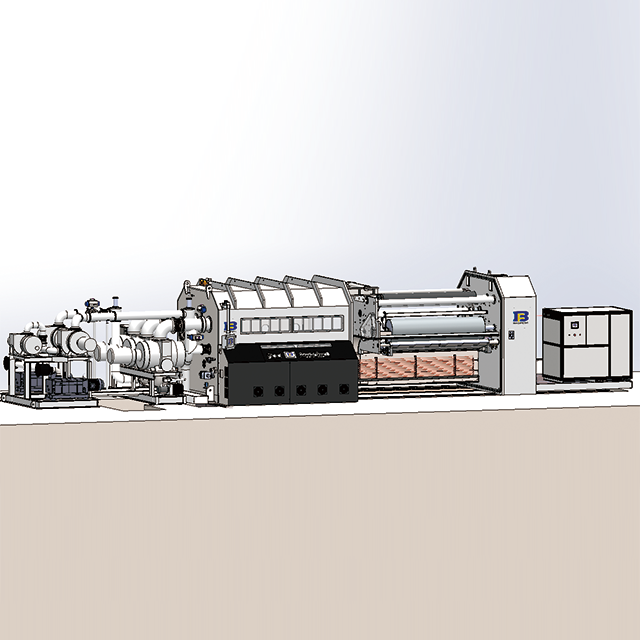
The packaging and converting industries are actively shifting away from traditional aluminum foil. They are adopting high-barrier metallized polymers rapidly. This transition helps manufacturers reduce package weight significantly. It also improves flexible packaging sustainability dramatically. Achieving consistent nanometer-scale metal deposition at high web speeds presents a massive operational challenge. It requires precise environmental controls and exact mechanical handling. Minor variations in vacuum pressure or web tension ruin barrier integrity instantly. Investing in a modern Roll to Roll Metallizer represents more than a basic capacity upgrade. It is a fundamental strategic requirement. The technology stabilizes Oxygen Transmission Rates (OTR) across long runs. It prevents catastrophic adhesion failures during converting. Optimized equipment protects your production output against excessive material waste. We will explore the critical performance metrics guiding these upgrades. You will learn how precise continuous deposition guarantees profitable scalability in advanced film production.
Barrier Optimization: Modern roll-to-roll (R2R) metallizing drops OTR and WVTR to foil-replacement levels without the associated material weight or cost.
Adhesion Reliability: Integrated inline web treating (plasma/corona) eliminates the most common failure point—metal flaking and poor bond strength.
Risk Mitigation: Precision tension control and advanced cooling drum technology prevent thermal degradation and wrinkling in heat-sensitive substrates like BOPP and PET.
Procurement Logic: Evaluating an R2R system requires looking past top-line web speeds and scrutinizing vacuum stability, inline monitoring, and integration capabilities.
Legacy packaging structures relied heavily on thick aluminum foil layers. Foil carries heavy material costs globally. It suffers from severe supply chain volatility and unpredictable lead times. Traditional foil also lacks practical recyclability in many standard municipal waste streams. Modern sustainability goals demand better, lighter packaging alternatives. Outdated metallizers or basic batch processing systems fail to keep up. They struggle to maintain consistent optical density (OD) across large film rolls. Operators frequently encounter high scrap rates using older machines.
Edge defects and pinholing ruin entire production runs without warning. You cannot easily meet stringent compliance standards using legacy equipment. Food and medical grade packaging require absolute barrier uniformity. Any microscopic pinhole allows oxygen to degrade the enclosed product.
Shifting to continuous processing solves these inherent scalability limits. A specialized Roll to Roll Metallizer represents a necessary manufacturing evolution. It enables high-yield, low-defect barrier film production reliably. You eliminate the start-and-stop delays of batch cycles completely. Manufacturers gain dependable output volumes month after month. They secure superior quality control over continuous deposition runs. This shift modernizes your entire converting floor. You gain flexibility to address demanding fast-moving consumer goods requirements.
Continuous vacuum deposition transforms standard polymer films into advanced barrier materials. The process deposits a uniform, highly dense aluminum matrix directly onto the substrate. This nanometer-thick layer tightly blocks migrating gas molecules. It significantly drops Oxygen Transmission Rates (OTR). Oxygen exposure causes rapid lipid oxidation in food products. Blocking it preserves flavor profiles safely.
Water Vapor Transmission Rates (WVTR) also plummet to near-foil levels. Moisture ruins dry goods and degrades pharmaceutical efficacy. We see massive improvements in baseline barrier integrity against humidity. This physical defense directly translates into extended shelf-life outcomes. Fast-Moving Consumer Goods (FMCG) stay fresh and viable longer on retail shelves. Brands reduce food waste across their entire distribution chains. Retailers demand this extended shelf stability constantly. A modern setup ensures you deliver these strict barrier metrics reliably.
Film converters demand absolute consistency across the entire web width. Advanced wire-feed systems achieve this exact mechanical requirement flawlessly. They supply pure aluminum wire into heated titanium diboride evaporation boats at precise speeds. The vaporized metal coats the moving substrate evenly. You do not see localized thinning or heavy dark spots. This control eliminates annoying "banding" and visible optical defects.
Films exit the vacuum chamber featuring perfectly uniform optical density. Brands rely on this flawless appearance for premium retail product packaging. Operators use closed-loop feedback systems to maintain this density continuously. They adjust wire feed rates dynamically to match the exact web speed. A reliable Roll to Roll Metallizer handles these minute adjustments automatically. You avoid relying on manual operator guesswork.
Sustainability initiatives drive companies toward thinner, lighter packaging materials everywhere. The system handles ultra-thin substrates seamlessly. You can process BOPP, PET, CPP, and PLA films easily. The hardware maintains structural integrity during high-speed vapor deposition. It supports aggressive corporate light-weighting initiatives fully. You reduce total plastic usage per consumer package.
The metallized film still retains extremely high barrier properties despite being thin. This versatility allows flexible packaging manufacturers to adapt quickly to market demands. They can pivot to newer eco-friendly mono-materials without retooling their lines. You maintain profitability while expanding your sustainable product catalog.
Versatility benefits include:
Reduces overall packaging weight for transport logistics.
Lowers raw material consumption per roll produced.
Maintains strict oxygen barrier requirements for perishables.
Adapts cleanly to heat-sensitive bioplastics like PLA.
Metal adhesion remains the primary point of failure in converting operations. Poor adhesion inevitably leads to severe delamination issues later. This failure happens during subsequent lamination or printing stages. It destroys the final product structure completely. The ink or adhesive pulls the metal layer off the base film. You lose the entire production run when this occurs.
To solve this, advanced equipment incorporates inline surface treatment. You will typically find plasma or corona treaters positioned just prior to the deposition zone. This integration modifies the surface energy of the polymer web instantly. The surface chemistry changes fundamentally in a fraction of a second. It creates highly reactive active sites on the polymer film surface.
These energetic sites form strong chemical bonds directly with the vaporized metal. Manufacturers no longer rely merely on weak physical adhesion. The measurable outcomes speak for themselves clearly. Treated films achieve consistently high dyne levels immediately. They pass aggressive tape tests post-metallization without failing. The metal layer stays firmly attached to the substrate matrix. You eliminate flaking entirely and ensure downstream processing stability. Converters run these treated rolls through high-speed printing presses confidently.
Vaporizing aluminum wire inherently generates intense heat inside the vacuum chamber. Heat-sensitive films stretch, melt, or lose their mechanical properties if mismanaged. To evaluate equipment safely, you must check the chilled drum systems. Efficient cooling rolls dissipate heat rapidly from the moving web. Heat-transfer optimization keeps the thin substrate intact during continuous high-speed runs. Engineers monitor cooling fluid dynamics continuously to prevent substrate warping.
Variations in web tension cause immediate, irreversible material damage. Improper tension induces microscopic cracking in the newly metallized layer. These invisible cracks instantly destroy your gas barrier performance. A premium Roll to Roll Metallizer utilizes multi-zone closed-loop tension control systems. Precision roller alignment prevents wrinkling at extreme production speeds. It keeps the web perfectly flat throughout the entire chamber transit. Highly sensitive load cells provide constant tension feedback to the servo drive motors.
Moisture trapped inside substrates also disrupts operations heavily. Outgassing from the film spikes the chamber pressure. It destabilizes the deep vacuum environment quickly. You must address adequate pre-pumping stages during setup. Integrating web-drying mechanisms removes latent moisture before deposition begins. Advanced machines sometimes deploy cryogenic coils to freeze water vapor instantly. This vital step maintains absolute vacuum stability across long production shifts.
Common web handling mistakes to avoid:
Running heat-sensitive films at maximum speeds without adjusting cooling drum temperatures.
Skipping regular calibration of load cells across the tension zones.
Loading high-moisture substrates into the vacuum chamber without sufficient pre-drying.
Ignoring micro-scratching on guide rollers prior to web threading.
Evaluating a new system requires a highly structured technical approach. Pumping efficiency heavily dictates your machine uptime. Look closely at the system's exact pump-down time metrics. Faster vacuum generation equals higher overall equipment effectiveness (OEE). It reduces transition periods dramatically between roll changes. High-capacity diffusion pumps paired with robust roughing pumps ensure rapid cycling.
Next, scrutinize the inline quality monitoring capabilities closely. Running thousands of meters of out-of-spec scrap wastes time and raw materials. Look for systems featuring integrated closed-loop optical density (OD) scanners. Inline defect detection spots microscopic pinholes instantly. It alerts machine operators before small process errors become massive financial losses. The system maps defects accurately along the entire roll length.
Scalability requires highly repeatable machine setups daily. Evaluate the human-machine interface (HMI) for user-friendliness. It must handle comprehensive recipe management flawlessly. Automated tension profiles ensure consistent runs across different operator shifts. Evaporation boat control should adjust automatically based on real-time thickness feedback. These automation features guarantee consistent barrier film quality output.
Equipment Evaluation Matrix | ||
Evaluation Category | Standard Capability | Advanced Requirement |
|---|---|---|
Vacuum Pumping | Basic roughing and diffusion pumps | High-speed pump-down for maximum OEE |
Quality Monitoring | Offline manual OD checks | Inline closed-loop OD scanners and defect tracking |
Process Automation | Manual boat adjustment | HMI with full recipe management and automatic control |
Upgrading to a specialized Roll to Roll Metallizer transforms daily converting operations entirely. It directly correlates to superior film barrier properties. You achieve drastically lower scrap rates across all production lines. Manufacturers gain the technical capability to compete successfully in the high-margin flexible packaging market. The investment stabilizes output quality across highly demanding substrate types.
We recommend conducting a comprehensive material audit first. Identify the specific polymer substrates you process most frequently. Advise your engineering teams to request pilot test runs. Use your exact films to validate OTR and WVTR improvements locally. Test the post-metallization adhesion metrics rigorously using industry-standard tape tests. This empirical data ensures you select the perfect equipment for your facility.
A: Standard operational speeds range from 600 to over 1000 meters per minute. However, the optimal running speed strictly depends on your substrate thickness and the required optical density. Thinner, heat-sensitive films require slightly reduced speeds to prevent thermal degradation. Thicker substrates easily handle maximum velocity.
A: Yes, they routinely process sustainable materials like PE, PLA, and mono-material structures. These delicate webs require extreme precision. To run them successfully, the equipment must feature highly responsive multi-zone tension controls. Superior thermal management from the cooling drum is also mandatory to prevent melting.
A: Inline treatment occurs directly within the vacuum chamber just before deposition. This prevents airborne contamination and eliminates surface energy decay. Offline treatment exposes the film to ambient air, degrading its chemical reactivity rapidly. Inline integration results in significantly higher and more stable metal-to-polymer bond strength.