Views: 0 Author: Site Editor Publish Time: 2026-07-03 Origin: Site
The transition from batch processing to continuous web coating represents a fundamental shift in modern manufacturing. This evolution happens rapidly across various sectors. It is driven by an intense need for scale, measurable cost reduction, and uniform material quality across production runs. Manufacturers constantly face a distinct core challenge today. They must bridge the gap between extremely high-volume material demands and the physical realities of vacuum deposition technology. Relying on fragmented external supply chains often introduces unacceptable risks to product integrity. This article breaks down the primary sectors relying on continuous metallized web materials. We provide an evidence-based framework for evaluating a commercial Roll to Roll Metallizer. You will learn how to approach in-house integration or refine contract manufacturing strategies effectively. Our guidance focuses heavily on practical implementation and technical readiness.
Primary Markets: Flexible packaging, advanced electronics, energy storage, and automotive shielding drive the highest demand for continuous metallized web materials.
CAPEX Justification: Investing in a Roll to Roll Metallizer is generally validated by reducing per-unit coating costs and tightening supply chain control.
Evaluation Mandate: Decision-makers must prioritize web handling (tension control), thermal management, and vacuum system recovery times over theoretical maximum line speeds.
Implementation Reality: Successful rollout requires rigorous facility preparation, including cleanroom infrastructure and specialized operator training.
Manufacturers across multiple sectors are fundamentally rethinking their material supply chains. Reliance on fragmented third-party converters often introduces severe production bottlenecks. You lose control over lead times when depending entirely on external coating schedules. Quality inconsistencies also plague outsourced models. A slight deviation in vacuum pressure during an outsourced run can ruin an entire batch. Furthermore, sending proprietary layer structures to external vendors creates significant intellectual property risks. Competitors can easily reverse-engineer specialized barrier designs if confidentiality protocols fail.
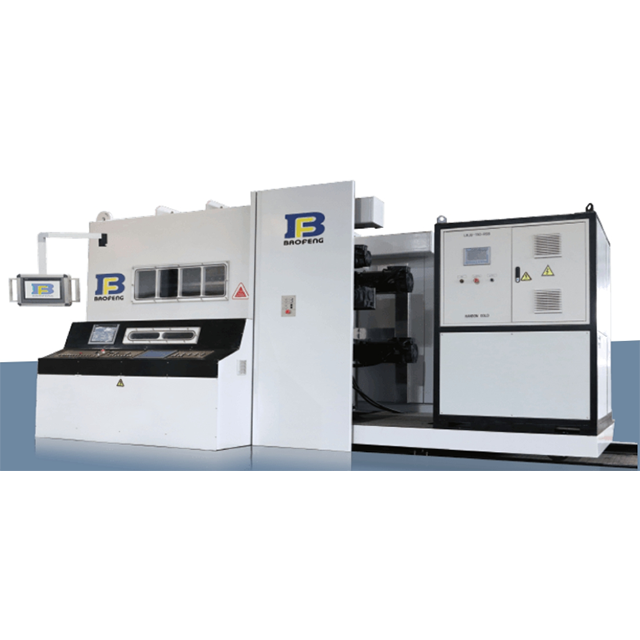
Internalizing this process changes the entire operational dynamic. Procuring an industrial Roll to Roll Metallizer allows manufacturers to control critical variables directly. Your engineering teams can monitor optical density in real-time. They can adjust barrier performance parameters on the fly. Direct control over deposition rates ensures consistent uniformity across thousands of meters of web. This level of autonomy eliminates the back-and-forth communication normally required to fix outsourced quality failures.
The primary return on investment drivers extend far beyond simple per-unit savings. Internal systems drastically reduce material waste. Operators can stop a flawed run immediately rather than discovering the error post-delivery. Your research teams also benefit from faster prototyping of new film structures. They can test a novel polymer blend on Monday and analyze the metallized results by Tuesday. Finally, internalized processing consolidates your quality assurance protocols. You maintain a single, unbroken chain of custody from raw substrate to finished roll.
The flexible packaging industry consumes vast quantities of metallized materials daily. These oxygen and moisture barrier films primarily utilize PET, BOPP, and PE substrates. Their main purpose is extending product shelf life safely. Coffee, snack foods, and medical supplies all rely on these ultra-thin metallic layers to block environmental degradation. A microscopic pinhole in the metal layer can compromise an entire product line. Therefore, the deposition quality must remain flawless over massive surface areas.
Evaluating equipment for this sector requires a highly specific lens. The machine must handle extremely thin, heat-sensitive substrates. It must do this without wrinkling or causing thermal degradation. Aluminum deposition generates intense radiant heat inside the vacuum chamber. If the cooling mechanism fails, delicate BOPP films will melt or stretch instantly. Uniformity of aluminum deposition is another non-negotiable metric. The system must guarantee consistent Optical Density (OD) across the entire web width.
Compliance and trust form the backbone of food packaging operations. Systems must support strict GMP (Good Manufacturing Practice) workflows. The resulting metallic layers must be entirely FDA-compliant and non-migratory. You cannot risk aluminum particles leaching into acidic foods. Maintaining a highly sanitary cleanroom environment around the winding mechanism prevents particulate contamination.
Substrate Type | Typical Thickness | Primary Barrier Role | Thermal Sensitivity |
|---|---|---|---|
BOPP | 12-20 microns | Moisture / Vapor | High |
PET | 10-15 microns | Oxygen / Aroma | Moderate |
LDPE | 25-40 microns | Sealant / Secondary Barrier | Very High |
Advanced electronics require precision far beyond standard packaging applications. This sector relies heavily on continuous metallized web materials for critical components. Typical application profiles include dielectric films for high-voltage capacitors. Manufacturers also produce copper-clad polyimide for flexible printed circuits (FPCs). More recently, the electric vehicle boom has driven massive demand for current collectors used in solid-state batteries. These components demand absolute structural integrity at a microscopic level.
When evaluating equipment for electronic applications, standard specifications rarely suffice. You must look for systems offering support for multi-source deposition. The ability to combine sputtering and evaporation in a single pass is highly advantageous. High-precision tension isolation zones are entirely mandatory. If the web stretches even a fraction of a millimeter, micro-cracking occurs in the conductive layers. These invisible cracks will instantly ruin a battery's conductivity or short out a flexible circuit.
Risk mitigation in this sector revolves primarily around atmospheric management. Outgassing from polymer substrates inside the vacuum chamber is a severe threat. As polymers heat up, they release trapped moisture and volatile organic compounds. This gas disrupts the vacuum and compromises metal adhesion.
High-capacity cryopumping: Rapidly freezes and captures moisture vapor before it ruins the vacuum environment.
Dedicated outgassing zones: Pre-heats the substrate in a separate chamber section to release volatiles early.
Plasma cleaning arrays: Bombards the film surface to remove microscopic organic residues prior to coating.
Residual gas analyzers: Monitors the exact chemical makeup of the vacuum atmosphere in real-time.
The automotive and aerospace industries push metallized films to extreme environmental limits. Typical application profiles encompass radiant barrier insulation for vehicle cabins. They also include heavy-duty window tinting films designed for extreme UV rejection. Furthermore, aerospace components require advanced EMI/RFI shielding materials to protect sensitive navigation equipment. These films must survive decades of vibration, intense heat, and atmospheric pressure changes.
Evaluating machines for these heavy-duty applications requires a different approach. The equipment must possess the capability to handle thicker, heavier substrates. Multi-pass operations are often necessary to build up sufficient metallic density. Integration of plasma pre-treatment stations is absolutely critical here. Plasma etching alters the surface energy of the polymer. This ensures high adhesion of the metal layer to the substrate under extreme environmental stress.
Durability requirements dictate the testing standards your production line must meet. Testing for delamination and thermal cycling resilience is rigorous. Your base deposition quality must support these standards unconditionally. If the initial metal layer lacks chemical bonding strength, the entire composite material will fail during thermal expansion.
Performance Chart: Shielding & Thermal Testing Standards
Application Film | Primary Stressor | Key Quality Metric |
|---|---|---|
Window Tinting | UV Radiation / Heat | Adhesion Strength (No Blistering) |
Radiant Barrier | Thermal Cycling | Emissivity Retention |
EMI/RFI Shielding | Electromagnetic Interference | Surface Resistance Uniformity |
Selecting the right equipment defines your operational success for the next decade. Decision-makers often fixate on maximum line speeds, but true efficiency lies elsewhere. You must evaluate the core architectural dimensions of the machine. The interplay between mechanical handling, thermodynamics, and vacuum physics determines your actual yield rate. A fast machine that constantly breaks the web produces zero sellable material.
Web Handling & Tension Control: Closed-loop tension systems are strictly non-negotiable. The machine must utilize sensitive load cells and responsive dancer rollers. These components communicate continuously to prevent web breaks and material stretching.
Thermal Management: Aluminum evaporation generates immense heat. Cooling drums, often called chill rolls, must efficiently extract the heat generated by the condensation of metal vapor. Poor cooling results in warped films and rejected batches.
Vacuum Architecture: Pumping speed dictates your cycle times. Look for logical stage-separation between roughing and high vacuum zones. This design minimizes downtime during roll changeovers and stabilizes the deposition environment.
System Automation: Modern Human-Machine Interface (HMI) systems should offer comprehensive data logging for traceability. Recipe management allows quick transitions between different products. Automated pump-down sequences reduce operator error during startup.
When properly integrated, an advanced Roll to Roll Metallizer harmonizes these four dimensions perfectly. The tension control prevents wrinkles, while the cooling drum locks in the structural integrity. Meanwhile, the automated vacuum architecture ensures consistent atmospheric purity.
Bringing a massive vacuum system into your facility requires immense preparation. Implementation failures rarely stem from the machine itself. They usually result from inadequate environmental planning. Facility readiness is your first major hurdle. You must secure high-capacity electrical infrastructure. Heavy-duty chilled water loops are mandatory to support the cooling drums. Specific floor loading requirements must also be met, as these machines are incredibly heavy.
Skill gaps present the second major implementation risk. Continuous vacuum processing requires highly specialized metallurgical and mechanical troubleshooting skills. Standard machine operators cannot safely run these systems without extensive instruction. You must factor in comprehensive, vendor-led training programs into your rollout timeline. An untrained operator can accidentally crash the vacuum system, causing days of expensive downtime.
Your shortlisting logic should follow a methodical path to mitigate these risks. First, audit your current material volume and project your five-year growth precisely. Second, request pilot-scale coating trials on your specific substrates from potential vendors. Never buy a machine based purely on generic specifications. Third, evaluate vendors based on localized field service and spare parts availability. A machine down for two weeks awaiting an international parts shipment will destroy your production schedule.
Integrating continuous metallization capabilities fundamentally transforms manufacturing operations. It shifts a business from being a passive material buyer to an active material innovator. This shift only succeeds provided the equipment perfectly aligns with your specific industry tolerances. Careful evaluation of vacuum architecture and tension handling prevents costly production bottlenecks down the line.
Prioritize rigorous pilot testing on your proprietary substrates before committing to equipment.
Ensure your facility infrastructure can handle the intense electrical and thermal loads required.
Build a specialized internal team through vendor-led training programs early in the implementation phase.
Base your final procurement decision on empirical yield rates and post-installation support, rather than theoretical top speeds.
A: Most industrial systems easily handle PET, BOPP, PI, LDPE, and paper. You will need specific web tension and cooling modifications for highly elastic or heat-sensitive polymers. Thicker materials demand robust handling mechanisms to maintain consistent deposition rates without straining the web path.
A: It depends heavily on production volume and material margins. High-volume packaging applications often see returns within 24 to 36 months. Meanwhile, specialized electronic film applications usually yield faster returns. This speed comes directly from the higher premium margins associated with advanced dielectric materials.
A: The primary hidden operating expenses revolve around utility consumption and consumables. High electricity usage is a constant factor. You must regularly replace evaporation boats or sputtering targets. Routine vacuum pump maintenance, including oil changes and seal replacements, also adds up. Finally, providing adequate chilled water utilities requires consistent energy spending.