Views: 0 Author: Site Editor Publish Time: 2026-06-26 Origin: Site
Supply chain disruptions and packaging failures often stem from a single, overlooked variable. We rarely notice the micro-level consistency of metallized films until something goes wrong. For procurement teams and packaging engineers, evaluating film quality goes far beyond checking a basic spec sheet. You must deeply understand how base substrates interact during metal deposition. You also need to know how manufacturing tolerances directly impact downstream converting processes. Identifying a high-quality metallized film requires a rigorous, systematic evaluation. You must assess barrier properties, bond strength, and base substrate compatibility. Crucially, the precision of the supplier's Roll to Roll Metallizer equipment plays a central role. Poor equipment calibration leads to inconsistent coating, putting your entire production line at risk. We will explore how to quantify quality metrics, select the right substrates, and audit suppliers effectively. You will learn to recognize true precision and avoid costly manufacturing defects.
True film quality is defined by consistent Optical Density (OD) and verifiable barrier performance (WVTR/OTR) across the entire web.
High metal adhesion (bond strength) is non-negotiable to prevent delamination during lamination, printing, or extrusion processes.
The calibration and technological capability of the supplier’s roll to roll metallizer directly dictate defect rates (e.g., pinholing, uneven coating).
Selecting the right base substrate (PET, BOPP, CPP) is as critical as the metallizing process itself for specific end-use applications.
Poorly manufactured film causes significant disruptions across the entire manufacturing cycle. You often cannot see the microscopic flaws until the material reaches the high-speed conversion line. We must recognize how sub-standard materials drain operational resources.
Operational Bottlenecks: Poorly wound rolls cause major headaches on the factory floor. Inconsistent web tension leads to frequent web breaks. These breaks slow down conversion lines significantly. They also increase your scrap rates. Operators waste hours rethreading machines instead of running production. You lose valuable manufacturing time due to unstable materials.
Shelf-Life Failures: Micro-cracks severely compromise the protective barrier. Pinholing allows oxygen and moisture to penetrate the packaging. This leads to premature food spoilage. Product degradation ruins consumer trust immediately. Retailers will reject compromised shipments. You end up wasting the entire product batch because of invisible film defects.
Brand Liability: Delamination during consumer use destroys brand perception. Consumers perceive peeling packaging layers as a severe lack of quality. It signals potential product safety issues. These failures can even result in strict compliance violations. We must view film quality as a foundational risk management tool. You protect your brand reputation by enforcing strict material standards.
You cannot manage what you do not measure accurately. Evaluating film requires strict adherence to quantitative data. We evaluate three primary performance indicators to determine true material grade.
OD measures the exact amount of metal deposited onto the film surface. High quality does not just mean achieving a high OD number. True quality lies entirely in the variance. You must look for minimal OD variation across the entire web. A standard benchmark is a ±5% variance allowance. This applies across both the machine direction (MD) and transverse direction (TD). Spikes in OD cause brittle, inflexible spots. Dips in OD severely compromise the environmental barrier. Reliable scanning ensures the coating remains perfectly even throughout the roll.
You must block environmental factors from reaching the enclosed product.
Water Vapor Transmission Rate (WVTR): This metric is critical for dry foods. It protects sensitive electronics from ambient humidity damage. It prevents snacks from going stale.
Oxygen Transmission Rate (OTR): This is essential for fats and oils. It prevents oxygen-sensitive products from going rancid. It preserves the flavor profile of coffee and meat products.
Evaluation standard: Do not accept theoretical baseline claims from marketing brochures. Always request formal ASTM-compliant testing data. Standardized data proves the film performs exactly as advertised. It removes all guesswork from your structural engineering process.
There is a major structural difference between chemical bonding and basic mechanical adhesion. Weak adhesion causes layers to separate easily under physical stress. High bond strength ensures the metal layer stays intact perfectly. It must survive rigorous lamination, printing, and extrusion processes. Look for suppliers utilizing standardized tape tests. They should also provide comprehensive heat-seal test results. These tests prove metal layer stability before further conversion begins. Excellent adhesion prevents highly costly lamination failures down the line.
Quality Metric | Primary Function | Standard Evaluation Method | Common Failure Consequence |
|---|---|---|---|
Optical Density (OD) | Measures metal deposition thickness | ±5% variance limit across web | Uneven barrier, visible banding |
WVTR | Blocks moisture ingress/egress | ASTM F1249 testing protocol | Stale dry foods, corroded components |
OTR | Blocks oxygen ingress | ASTM D3985 testing protocol | Rancid fats, rapid food spoilage |
Bond Strength | Measures metal-to-substrate adhesion | Standardized Tape / Heat-Seal Test | Delamination during printing |
Selecting the right base film is vital for ultimate project success. Base substrates behave quite differently under extreme vacuum deposition. You must meticulously match the polymer structure to the final application.
Metallized PET (Polyester): High tensile strength defines metallized PET. It offers excellent thermal stability during high-speed conversion. It handles intense heat without shrinking or curling. It is optimal for demanding high-barrier requirements. You will frequently find it in coffee pouches and aerospace insulation. It also protects sensitive electronic components during global transit. We often select it for long shelf-life products.
Metallized BOPP (Biaxially Oriented Polypropylene): Metallized BOPP delivers a superior moisture barrier. It combines this performance with high cost-efficiency. It heavily dominates the global snack food packaging sector. Crisps and biscuits rely entirely on this specific material. It provides excellent puncture resistance. It also offers superb crisp printability. You get great visual shelf appeal alongside solid protection.
Metallized CPP (Cast Polypropylene): Cast Polypropylene provides exceptional heat-seal strength. It offers high flexibility without cracking the delicate metal layer. It serves perfectly as an internal sealant layer. We use it extensively in multi-layer flexible packaging structures. It provides strong, reliable package closures under intense sealing pressures.
Defect prevention starts strictly inside the vacuum chamber itself. The fundamental technology driving the metallization process dictates the final output quality. You cannot compensate for bad deposition later in the conversion cycle.
A high-end Roll to Roll Metallizer maintains deep, uninterrupted vacuum environments. Consistent pressure levels are absolutely crucial for perfect metal deposition. Pressure fluctuations cause rapid, uncontrolled oxidation. Oxidation leads directly to extremely poor metal adhesion. It creates a dull, underperforming finish. Superior equipment prevents these microscopic flaws from forming in the first place.
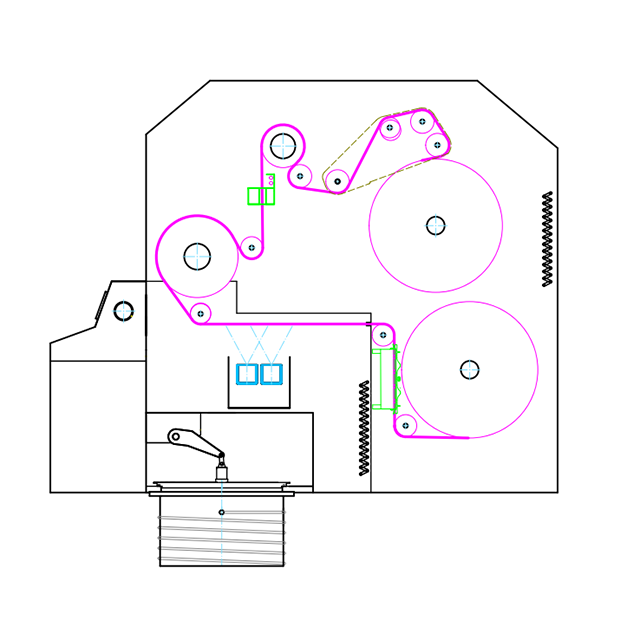
The metallization process inherently generates intense, localized heat. Aluminum vaporizes at extreme temperatures inside the deposition zone. Quality film requires precise cooling drums over the Roll to Roll Metallizer. These chilled drums prevent the base polymer from warping. They ensure the film does not lose fundamental structural integrity. Poor cooling causes the film to stretch and distort permanently. Advanced tension control actively prevents telescoping rolls. It ensures the web winds perfectly flat for smooth downstream feeding.
Reliable suppliers eliminate production blind spots completely. They use sophisticated in-line optical density scanners. These scanners integrate directly into their primary metallizers. They detect subtle coating variances in real-time. Operators can correct technical issues immediately during the active run. This technology eliminates massive runs of defective, unsellable material. It guarantees absolute consistency from the first meter to the last.
Regulatory scrutiny is tighter than ever today. You must ensure full regulatory compliance across your entire packaging portfolio. Ignoring these standards invites severe legal and operational risks.
Always verify relevant food safety certifications. Check for explicit FDA or EFSA approvals carefully. Local regulatory equivalents also apply depending on your distribution region. These strict regulations cover both the base film and the aluminum wire used. Uncertified wire can inadvertently introduce dangerous heavy metal contaminants. You must demand compliance certificates for all incoming raw materials.
Demand a highly transparent, fully documented supply chain. Suppliers must document the exact chemical origin of their resins. They must strictly track the specific metals used in deposition. Traceability protects you directly during unexpected compliance audits. It streamlines product recalls if a broader industry issue suddenly occurs. You need instant access to accurate batch records.
The packaging industry is evolving rapidly right now. We clearly see a strong shift toward mono-material structures. All-PP laminates are gaining huge traction globally. They utilize metallized BOPP or CPP to radically improve recyclability. This approach maintains high barrier performance efficiently. It simultaneously helps brands meet strict eco-friendly corporate goals. You simplify the consumer recycling stream by avoiding mixed plastics.
Choosing a dependable supply partner requires a highly structural approach. You cannot rely on glossy marketing brochures alone to make decisions.
Sample Testing Protocol: Do not rely on small A4 sheet samples. Small sheets hide critical web tension issues easily. They do not reveal dangerous winding defects. Always request a full production trial roll. Test it vigorously on your actual conversion equipment. This successfully verifies machineability under real-world factory stress.
Technical Support: Evaluate their internal technical expertise deeply. Does the supplier offer active polymer selection consulting? Or do they just push generic off-the-shelf SKUs? A true manufacturing partner helps you engineer the perfect structural design. They will troubleshoot lamination issues directly alongside your engineering team.
Capacity and Lead Times: Assess their actual production capacity thoroughly. Can their metallizing fleet handle sudden volume scaling? Rapid production scaling often causes a sudden drop in quality control. Ensure they operate redundant machines. Redundancy manages large unexpected orders seamlessly without delaying your shipments.
Sourcing high-quality metallized film requires looking far past the surface shine. It demands rigorous verification of empirical barrier data. You must insist on comprehensive adhesion testing protocols. You also need a deep understanding of the supplier's core manufacturing capabilities. Their technical equipment directly dictates your product safety and brand reputation. We recommend auditing your current film failure rates immediately. Look closely at any recent delamination issues and subtle shelf-life loss. Then, initiate a formal pilot test with a new supplier. Choose one that provides fully documented OD and OTR/WVTR variance reports. Make objective data the primary foundation of your future procurement decisions.
A: Pinholing is typically caused by dust, oligomers on the base film, or unstable evaporation in the roll to roll metallizer. It is mitigated through cleanroom-level web cleaning and precise vacuum controls. Advanced machines utilize closed-loop systems to keep the chamber environment perfectly stable. This prevents microscopic debris from interfering with the aluminum vapor.
A: In-line plasma treatment alters the surface energy of the base substrate right before metal deposition. It cleans the polymer surface at a microscopic level. This process significantly increases the chemical bond between the polymer and the aluminum. It results in exceptionally high bond strength, effectively reducing the risk of downstream delamination.
A: Traditional multi-material laminates are difficult to recycle because they require complex separation processes. However, metallized mono-material structures are increasingly recognized by modern recycling infrastructure. They process easily within polyolefin recycling streams. This makes them a highly preferred choice for sustainable packaging initiatives.
A: Aluminum foil is a solid sheet of metal. It is heavier and prone to flex-cracking. Metallized film is a polymer substrate with a microscopic layer of aluminum vapor-deposited onto it. It offers high flexibility and excellent puncture resistance. It also features a significantly lower carbon footprint compared to traditional solid foil.