Views: 0 Author: Site Editor Publish Time: 2026-06-18 Origin: Site
Packaging engineering faces a constant, defining tension. You must achieve strict barrier requirements against moisture, oxygen, and light. Yet, you want to avoid the heavy weight, structural limitations, and rigidity of pure aluminum foil. Metallized films solve this exact challenge. They consist of polymer substrates coated with a micro-thin layer of metal, usually aluminum. This engineered material bridges the critical performance gap between standard clear plastics and traditional foil.
This guide helps packaging engineers and procurement teams evaluate metallized substrates carefully. We will explore specific requirements for food, industrial, and healthcare applications. You will learn how substrate choices and manufacturing precision directly impact your packaging success. By mastering these material properties, you can optimize product shelf life and streamline manufacturing operations. Let us explore the technical nuances driving modern flexible packaging innovation.
Metallized films offer up to a 10x improvement in Oxygen Transmission Rate (OTR) and Water Vapor Transmission Rate (WVTR) compared to uncoated base films.
Substrate selection (PET, BOPP, or CPP) fundamentally dictates the film’s mechanical properties, sealability, and primary application.
The precision of the roll to roll metallizer directly controls optical density, metal adhesion, and barrier consistency—critical metrics for avoiding packaging failures.
Transitioning to metallized films requires evaluating implementation risks, including flex-cracking and metal transfer during the converting process.
Aluminum foil provides an absolute barrier. It stops all gases and light from degrading your product. However, foil is heavy, rigid, and prone to pin holing. When foil creases during transport, microscopic holes form. These pinholes instantly destroy the absolute barrier. Bare polymers like plain PET or BOPP are lightweight and flexible. Unfortunately, they lack the inherent barrier necessary for extended shelf life. Oxygen and moisture easily permeate clear plastics.
You need a middle ground. The objective is to achieve targeted OTR and WVTR thresholds. You must prevent oxidation and moisture ingress. At the same time, the film must maintain high line speeds on packaging machinery. Heavy foil slows down sealing jaws. Clear plastics fail barrier tests. Metallized films deliver the exact performance balance required for modern logistics.
Transitioning to metallized structures creates a massive economic impact. Reduced material weight drives significant light weighting initiatives. Lighter packaging lowers shipping costs and material spend. Improved barrier properties heavily reduce supply chain spoilage. Your products survive longer on store shelves and endure harsh environmental changes during transit.
Table 1: Material Performance Comparison | ||||
Material Type | Barrier Level | Flexibility | Weight Profile | Pinhole Risk |
|---|---|---|---|---|
Pure Aluminum Foil | Absolute (Zero OTR/WVTR) | Low (Prone to creasing) | Heavy | High |
Bare Polymer (PET/BOPP) | Low (High OTR/WVTR) | High (Highly flexible) | Light | None |
Metallized Film | High (Targeted OTR/WVTR) | High (Polymer-like) | Light | Low |
Film performance relies entirely on the vacuum metallization process. Inside a vacuum chamber, extreme heat vaporizes aluminum wire. This aluminum vapor then deposits onto a moving polymer substrate. The vacuum environment prevents the aluminum from oxidizing before it coats the film. It sounds simple in theory, but execution requires immense precision.
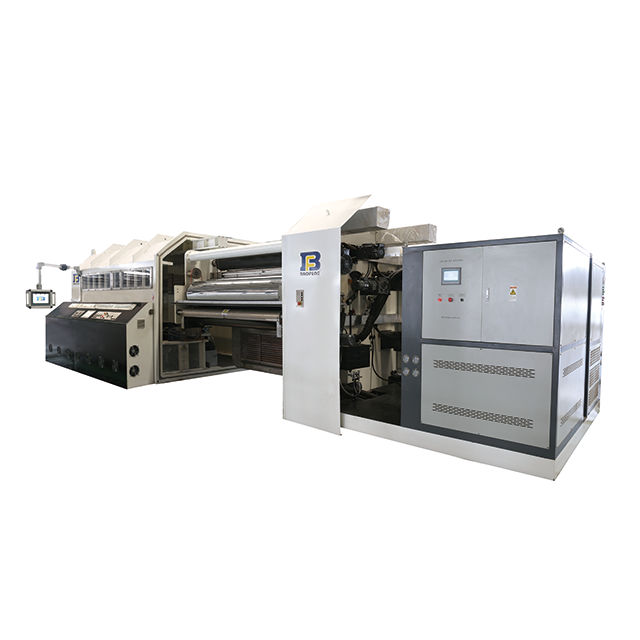
The engineering tolerances of the Roll to Roll Metallizer govern two critical failure points. First is uniformity. Inconsistent aluminum deposition leads to a defect called "striping." Striping leaves visibly lighter bands across the film web. These light bands represent compromised barrier zones. Second is thermal management. The vaporization process generates intense heat. Inadequate cooling drums inside the Roll to Roll Metallizer can easily warp heat-sensitive substrates like BOPP or CPP. Warped films will not run through laminators or printing presses.
Buyers must vet suppliers aggressively based on their equipment. The metallization machinery must maintain continuous, stable vacuum environments. Precise tension control is also non-negotiable. If the tension is too high, the film stretches and the metal layer cracks. If the tension is too low, the film wrinkles and ruins the roll.
Vacuum Stability: Ensure the supplier monitors chamber pressure continuously during production runs.
Cooling Capacity: Verify their chilling drum technology can handle low-melt substrates without causing thermal distortion.
Tension Control: Ask about their automated web tension systems to prevent micro-cracking.
Defect Detection: Confirm they use inline optical density scanners to catch striping immediately.
You cannot treat all metallized films equally. The base web fundamentally dictates the final application. We break down the solutions into three dominant base webs. You must match the substrate perfectly to your product requirements.
Metallized PET (MetPET): This material offers exceptionally high tensile strength. It boasts superior gas barrier properties and excellent temperature resistance. MetPET does not stretch easily. It survives high-temperature sealing processes flawlessly. Best for: Healthcare packaging, coffee pouches, and heavy-duty industrial applications. Coffee degassing valves bond well to MetPET structures. The strong oxygen barrier locks in roasted aromas.
Metallized BOPP (MetBOPP): This substrate provides an excellent moisture barrier. It is highly cost-effective and offers fantastic printability. MetBOPP feels softer and folds easier than MetPET. It runs beautifully on vertical form-fill-seal (VFFS) packaging machines. Best for: Snack foods, confectionery, and dry goods. Potato chip bags rely heavily on MetBOPP to keep moisture out and prevent rancidity.
Metallized CPP (MetCPP): This film delivers high puncture resistance. It also features built-in heat sealability. Unlike MetPET or MetBOPP, MetCPP acts as an excellent inner sealant layer. It resists tearing when packaging hard, sharp products. Best for: Inner sealant layers in laminations, dry pasta packaging, and medical device flow-wraps. The puncture resistance prevents sharp edges from piercing the barrier.
Use MetPET when your product demands extreme oxygen protection and long shelf life.
Choose MetBOPP for rapid, high-volume snack packaging where moisture control is paramount.
Specify MetCPP when you package sharp products like dried noodles or heavy industrial parts.
Always test substrate flexibility against your specific packaging machinery folding geometries.
A common industry misconception surrounds Optical Density (OD). Many engineers assume a higher optical density always equals better performance. They think a thicker metal layer infinitely scales the barrier. This is false. Past a certain OD threshold, the barrier plateaus. A thicker layer only increases material costs. It also makes the metal layer brittle. Brittle metal layers crack easily during converting. You must find the optimal OD sweet spot for your specific substrate.
Metal adhesion serves as your most critical evaluation metric. The aluminum must bond aggressively to the polymer base. If the aluminum flakes off, your entire lamination fails. The layers will separate. Suppliers secure this adhesion using specialized techniques. They apply corona treatment or chemical primers before metallization. These treatments modify the polymer surface energy. They give the vaporized aluminum something to grip.
Do not rely on generalized marketing claims for barrier performance. Always advise your procurement teams to require standardized testing data. Demand ASTM-certified reports. For example, use ASTM D3985 for oxygen transmission rates. Use ASTM F1249 for water vapor transmission rates. Hard data protects your product integrity.
Metallized layers are inherently fragile. They require careful handling. Excessive folding or aggressive tension during the converting process causes micro-cracks. Converting includes printing, slitting, and laminating. We call this failure "flex-cracking." Flex-cracking immediately degrades the barrier. You cannot see these micro-cracks with the naked eye, but oxygen finds them instantly. You must ensure your converting lines use smooth idler rollers and optimized web tension.
Metal transfer poses another severe risk. We often refer to this as "blocking." The metal layer can literally peel off the substrate. It sticks to the opposite side of the film roll during storage. Poor primer application or excessive winding tension usually causes this defect. When blocking occurs, the entire master roll becomes unusable scrap. Adhesion testing prevents this disaster.
Raw metallized rolls also exhibit high environmental sensitivities. The exposed aluminum layer remains highly susceptible to oxidation and moisture degradation. If you leave an unprotected roll in a humid warehouse, the barrier degrades before you even print it. You must store these rolls in climate-controlled environments. Always keep them wrapped in moisture-barrier bags before final lamination.
Running web tension too high on the laminator, inducing invisible micro-cracks.
Storing raw rolls in non-air-conditioned warehouses during summer months.
Failing to perform routine tape tests on incoming master rolls.
Using sharp-angled folding shoes on packaging machines designed for standard poly bags.
Metallized films function as a strategic compromise in packaging engineering. They offer near-foil barrier properties alongside polymer-level flexibility. This combination drives incredible material efficiency. You eliminate the weight and rigidity of solid aluminum foil while dramatically improving shelf life over standard plastics.
Your shortlisting logic must remain systematic. Base all decisions on your exact OTR and WVTR requirements. Match the specific polymer substrate directly to the mechanical stress your product will endure. Most importantly, audit your supplier diligently. Inspect their vacuum equipment, tension control systems, and adhesion-testing capabilities to guarantee consistent quality.
Before committing to large-scale procurement, request sample rolls. Perform rigorous adhesion tape tests in your own facility. Run trial laminations on your standard equipment. Validate the barrier properties after the film passes through your specific forming collars. Hard testing prevents costly production failures.
A: Foil is a solid sheet of pure metal. Metallized film is a standard plastic sheet coated with microscopic aluminum atoms. Foil provides a higher, absolute barrier but is heavy, rigid, and prone to creasing. Metallized film is flexible, lightweight, and highly puncture-resistant.
A: It depends heavily on the recycling infrastructure. The metal layer is microscopically thin and often does not disrupt polymer recycling. However, multi-material laminates are notoriously difficult to recycle. Mono-material structures are increasingly preferred for better circularity.
A: Rarely. In almost all modern packaging, the metallized layer is sandwiched between a printable outer layer and a food-safe inner sealant layer. This lamination protects both the food from the metal and the fragile metal coating from physical abrasion.